Postcard from London, England: Women-splaining Guerrillas at the Tate

Above: “How To Enjoy the Battle of the Sexes,” The Guerrilla Girls, London’s Tate Modern

Flash back to 1984 and the International Survey of Recent Paintings and Sculpture at the Museum of Modern Art in New York City.

Women artists did the math: Out of 165 artists, a mere 13 were women. The Guerrilla Girls were born. They picketed MOMA. As “the conscience of the art world,” they’ve been battling gender inequality and racism entrenched in it ever since.

Why masks? The protesters’ anonymity achieved by guerrilla masks puts the spotlight on the issues instead of the individual women artists or their talents.

The Tate Modern currently has a large wall dedicated to Guerrilla Girls’ posters stridently illuminating gender and race gaps throughout the world.

Continue reading “Postcard from London, England: Women-splaining Guerrillas at the Tate”
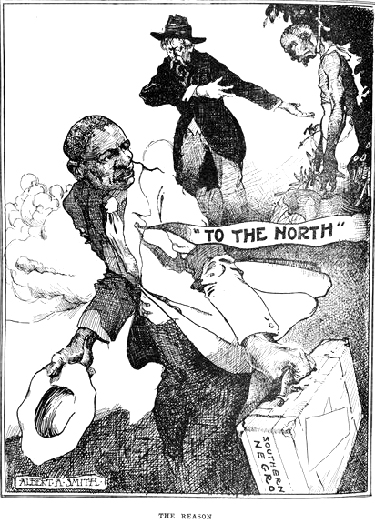
Mobs employing limbs of live oaks to mete out ‘justice’ were not uncommon

Above, “The Reason” by Albert A. Smith, 1920

Spent a lot of time with my nose buried in the pages of newspapers of a century ago while researching An Ostrich-Plumed Hat: And Yes, She Shot Him Dead and found myself often shocked by the stories I encountered.

Racism was not only entrenched, but there appeared little shame in embracing it openly in print. Ways were found to prevent Black men from affecting elections: poll taxes to discourage participation and refusal to allow Blacks to vote in the Democrats’ primaries. If no Blacks could vote in primaries, Black candidates would not be listed on the ballot. Mainstream white Democrat candidates boasted about this practice on the campaign trail. But that is all so minor compared to the accepted bias in the system of justice.

The truthful novel opens with the very public hanging of Leon Johnson for killing Dr. Augustus Maverick (1885-1913), an example clearly illustrating to Hedda Burgemeister what could happen to someone found guilty of shooting a powerful man in San Antonio, as she had done to brewery owner Otto Koehler (1855-1914). Executions attracted large crowds downtown.

Continue reading “Mobs employing limbs of live oaks to mete out ‘justice’ were not uncommon”