Postcard from Catania, Sicily: Path to sainthood painful, but it’s Santuzza’s day

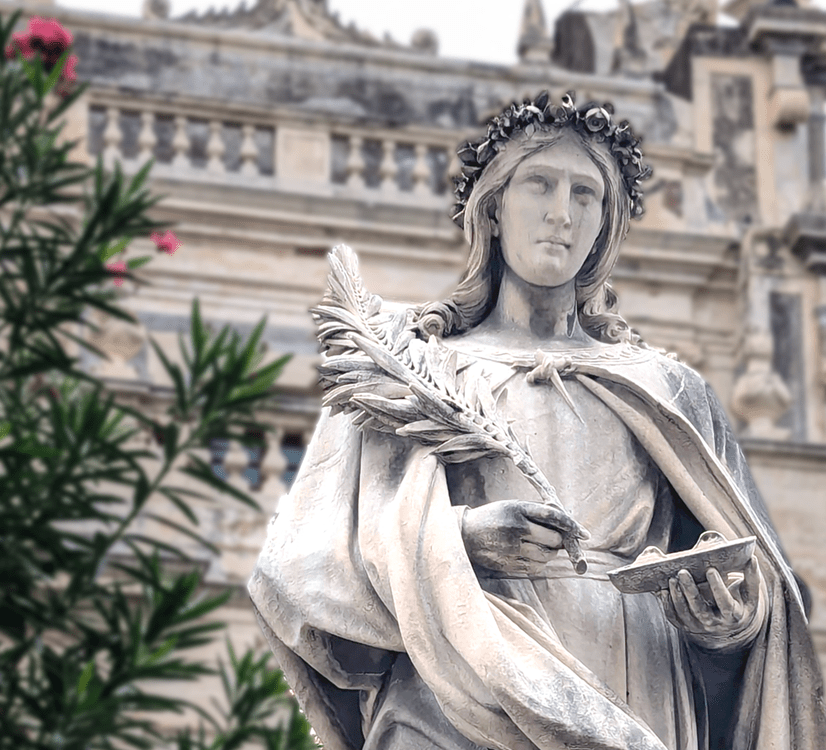
Above: Statue of Saint Agatha, affectionately known as Santuzza, in front of the Basilica di Sant’Agata in Catania

I wanted to do a “birthday” post for Saint Agatha (231?-251?), but recent world news knocked the wind out of my sails to the point I felt unable to complete it last night. But that’s not fair to Santuzza on her feast day, February 5.

Saint Agatha can’t be expected to solve all the world’s problems. The faithful turn to her for intercession so often; she already has a lot on her hands. The Sicilian martyr serves as the patron saint of victims of breast cancer or rape, and of wet nurses, firefighters, workers in bell foundries and bakers. Plus, Sicilians offer prayers to the Catania native for safety from earthquakes and volcanic eruptions of Mount Etna. The virgin martyr also is the patron saint of both Palermo and Catania in Sicily.

Continue reading “Postcard from Catania, Sicily: Path to sainthood painful, but it’s Santuzza’s day”
Postcard from Palermo, Sicily: Modern art in Sant’Anna haunt

Above: Richard Avedon’s 1981 photograph, “Natassja Kinski and the Serpent,” is superimposed over one of a cage protecting a cluster of bones in the crypt below Sant’Anna la Misericordia, home to Palermo’s Galleria d’Arte Moderna.

Granted this Richard Avedon photo of “Natassja Kinski” in the nude was not displayed in such close proximity to bones in the crypt of the church of Sant’Anna alla Misericordia, but, after all, nothing is more naked than bones. And churches in Italy have always been home to art, religious art that in the time of its creation was considered contemporary.

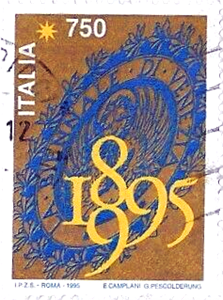
When citizens in Palermo determined they needed to have a Modern Art Museum in 1906, they boldly ventured forth to Venice in 1907 to acquire avant-garde works to supplement their Sicilian collection. Launched in 1895, the Venice Biennale quickly garnered international prestige. Ongoing buying trips through the years enabled the museum to trace the evolution of symbolism and modernism in art.

Continue reading “Postcard from Palermo, Sicily: Modern art in Sant’Anna haunt”

Postcard from Palermo, Sicily: ‘Crazy enlightenment project’ bridges centuries

Above: A contemporary overhead walkway sensuously links galleries in a recently renovated 18th-century palace, Palazzo Butera.

At first, I tried to resist, but Francesca insisted, saying, ‘You can fulfill all of your dreams here.’” 

Massimo Valsecchi, interviewed by Elaine Sciolino for an article published in The New York Times on September 26, 2024

We stayed in the Kalsa District, the old Arab quarter in Palermo, for a month in the spring of 2023. This meant we strolled upon a portion of an impressively long tiled veranda addressing the sea numerous times. However, we were clueless about the possibility of visiting the adjacent Palazzo Butera to discover the beauty contained within its walls.

Freshly renovated, the palace did not open its doors to the public as a museum until 2021 and, when we visited, still seemed the city’s best-kept secret. It certainly hadn’t made the guidebooks yet. The New York Times article quoted above nudged me to retrieve this postcard from the backlog of unmailed ones.

‘Everyone said we were mad,’ a serene Francesca Valsecchi admits with a smile as she recalls the decision she and her husband Massimo took in 2015, when they moved from an apartment in Cadogan Square in London to the colossal Palazzo Butera in Palermo…. what Massimo describes as his ‘crazy Enlightenment project.’”

Susan Moore, Apollo Magazine, August 30, 2022

Continue reading “Postcard from Palermo, Sicily: ‘Crazy enlightenment project’ bridges centuries”