The historic center of Cuenca seems an unlikely hub for viewing contemporary art. Barely making more sense than the remote outpost of Marfa, Texas.
But it’s here.
The Fundacion Antonio Perez is an incredibly entertaining jumble of contemporary art packed into a rambling maze of rooms in the former Convent of San Clemente.
Perched on a cliff in the “hanging houses” of Cuenca, the collection of Museo de Arte Abstracto Espanol is presented in unexpectedly sleek, contemporary rooms.
Both collections are worth visiting, but the art has so much competition from the spectacular views offered from their windows and patios.
The art scarcely stands a chance. The setting triumphs.
In 1867, Queen Isabella II (1830-1904) founded the Museo Arqueologico Nacional (MAN), partially in recognition of the need to protect Spain’s historical artifacts from political turmoil. The preservation of the cultural heritage of the country proved easier than the protection of her own rule. A revolt pushed the queen into exile in France the following year, and she wound up abdicating the throne in favor of one of her sons.
MAN traces the history of man in Spain from his earliest known origins and also includes extensive displays of ancient archaeological treasures from Egypt, the Near East and Greece.
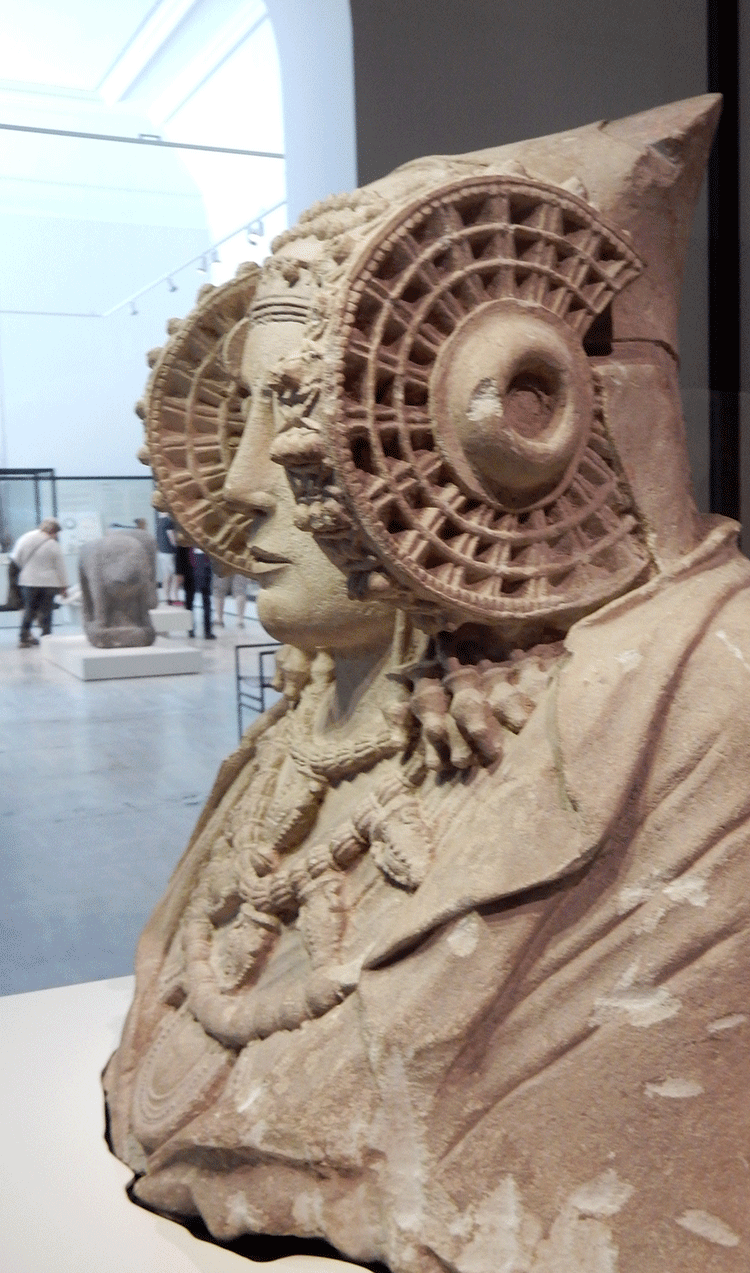
The featured image is known as the Lady of Elche, dating from the 5th or 4th century B.C. The “lady” was found in Elche, located on the Mediterranean coast of Spain and continually impacted by waves of invaders from Greece, Carthage, Rome and the land of the Moors.
The main structure housing MAN dates from the 19th century, but the museum was closed for five years beginning in 2008 to dramatically modernize the space displaying more than 15,000 items.
Yes, it is totally overwhelming. Not realizing the immensity of the collection, we squandered time in the prehistoric section of relatively little interest to us and felt rushed in viewing the rest, all of it masterfully displayed.
Madrid is famed for enormous museums filled with incredible collections attracting swarms of visitors.
But there are numerous oft-overlooked others housing artistic treasures where tour guides and their zombie-like followers rarely intrude. In fact, you virtually have the places to yourself. Museo Fundacion Lazaro Galdiano is one of those amazing spots.
The career in banking of Jose Lazaro Galdiano (1862-1947) was sidetracked by his interest in publishing literary and art magazines and a love of collecting. Obsessively collecting. Traveling the world to add to his holdings.
He commissioned his home on Serrano, a broad boulevard in downtown Madrid, in 1903, the year of his marriage to an Argentinian, Paula Florido. He named his sumptuous palace Parque Florido in her honor.
At the time of his death, he bequeathed the more than 12,500 items in his collection to Spain. Paintings include works by Hieronymus Bosch, Lucas Cranach, John Constable and El Greco. And Goyas, with no one elbowing you to get closer. The two Goya “brujas” canvases exhibited surely must contain the most frightening wicked witches ever depicted.
There is a glittering “treasure room” filled with rich religious artifacts and the royalty-worthy jewels of his wife. There are cases upon cases of specialized passions – miniature portraits, ivory carvings and beautifully preserved textiles. And there are hundreds upon hundreds more items that could not fit in the glass display cases but can be viewed close up by pulling out drawer after drawer below at your own leisurely pace.
As though Galdiano left them as a private feast for your eyes alone. Hidden in plain sight right in the heart of a city of more than 3-million people.




 Postcards from Barton Springs