Postcard from San Juan Chamula, Chiapas, Mexico: Grooming Graves to Welcome Back the Dead

Hallowmas, or All Saints Day, is such a convenient make-up day for Catholics. There are so many saints, some have been forgotten. November 1 represents a time to remember all of them in one powerful group prayer.

The following day, All Souls Day, is ideal for praying for all the departed, particularly those who escaped hell but were not quite good enough to have Saint Peter throw out the welcome mat – those poor souls stuck in limbo or purgatory.

For many of the indigenous people of Mexico, Catholicism is but a recent thin veneer topping centuries of ancient Mayan beliefs. We are in the heart of that land. November 1 is celebrated as Dia de los Inocentes, a time to communicate with all the small children your family might have lost. November 2 is Dia de los Muertos, or Day of the Dead.

While a small number of Americans hold séances to try to entice loved ones back for a visit, most Americans shrink away from the thought of inviting ghosts back to be part of our lives. But here, families devote much time and energy to cleaning their ancestors’ graves in preparation for decorating them with items to entice the departed back to earth.

This past Sunday, we viewed some of these efforts outside a church that burned long ago. A band played spirited music outside the front of the ruins to entertain those hard at work and those lying underground.

Please excuse the quality of these photographs, but San Juan Chamula operates under its own set of laws. And one of these is you are not allowed to take photographs in its churches or close-ups of any people without permission, rarely extended by the city’s elders (more later). Violators will have cameras confiscated, or worse.

This slideshow requires JavaScript.

Throughout San Juan’s valley, patches of marigolds are squeezed tightly amongst rows of corn. The marigolds will be harvested for the graves to help guide the dead to earth.

The sincerity of all the preparations is critical because one would not want the dead to feel inadequately welcomed, particularly because they can impact one’s prosperity throughout the coming year.
Postcard from San Cristobal de las Casas, Chiapas, Mexico: The Forty-Three

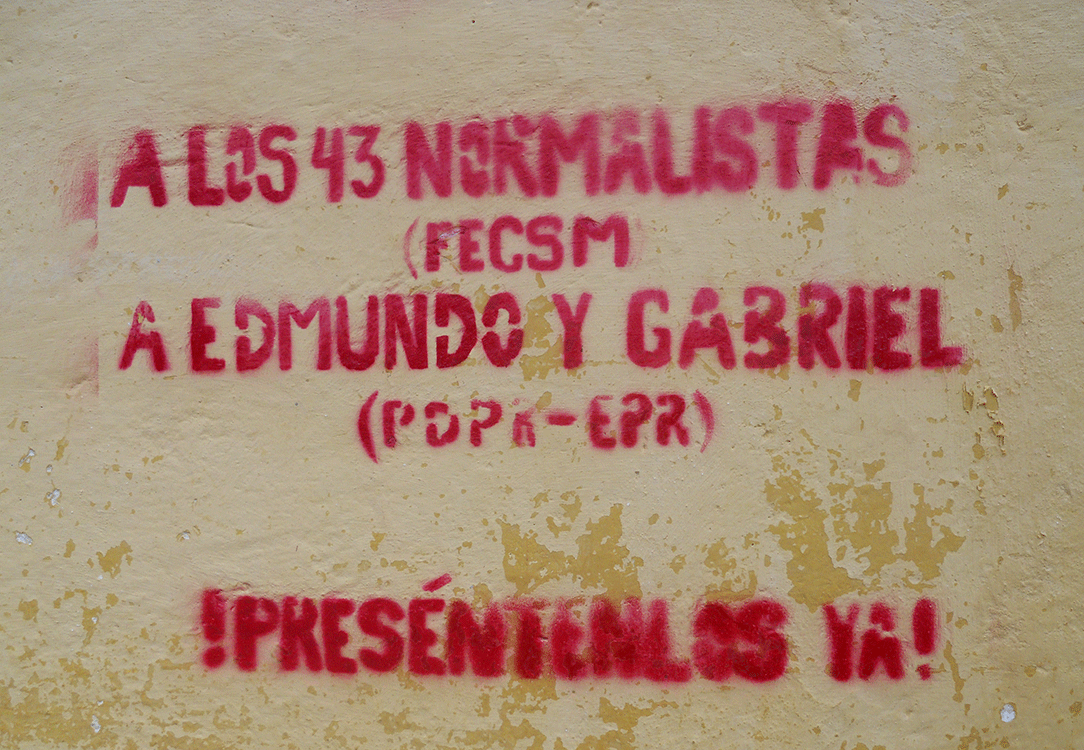
Forty-three. The number calls out from walls throughout downtown San Cristobal de las Casas.

And copies of their photographs leave their faces staring at you blankly as you wander near the zocolo at the heart of the city.

The desaparecidos, the missing students, may be from the State of Guerrero, but the sentiments of many of the young people studying to be teachers in this city appear to be with them.

City hall is heavily patrolled by well-armed soldiers during the day, but they check out for the night. On October 24, while the only guards were the janitors armed with mops, protesters took over city hall for the day. They also assumed control of the toll booths on the highway linking San Cristobal de las Casas and the state capital, Tuxtla Gutierrez.

This slideshow requires JavaScript.

Yesterday, the normalistas were back again, occupying city hall to call attention to the plight of their compadres.

The sit-in is peaceful. The protesters are unarmed. The blockade of the government offices is enforced by only a single string encircling the building.

Although the students could easily be overcome by force, the police and soldiers remain a distance away. There is no apparent desire to spark any confrontations. The students were allowed to express their concerns, with the everyday rhythms of the city expected to return today.

The Tragic Rule of Maximilian and Carlota in Mexico

Empress Carlota and Emperor Maximilian of Mexico, circa 1864, from the Lusher Collection and included in exhibit at the Witte Museum February 1 through March 30

City of Mexico, Thursday, Jan. 10, 3 p.m., 1867 – Yesterday morning Col. Paulino Gomez Lanadrid, commanding 700 reinforcements of Imperial troops sent to succor the besieged garrison at Cuernavaca, was killed near that place during an attack by a body of Liberals, who were lying in ambuscade….

More than 500 families, mostly Mochos and French, will leave here on the 20th with 4,000 French troops….

Maximilian is waiting for the last French soldier to leave. The shadow of the last of the expeditionary corps will not be lost sight of by the Archduke, who is now residing in a humble house between here and the Castle of Chapultepec.

The New York Times

And so, Maximilian, the falling emperor of Mexico, awaited his fate.

"Execution of Emperor Maximilian of Mexico" by Edouard Manet, 1868
“Execution of Emperor Maximilian of Mexico” by Edouard Manet, 1868 (not part of exhibit at the Witte)

The French installation of the Archduke Maximilian and his Belgian-born wife Charlotte to reign over the politically unstable Mexico of 1864 was bound not to end well. But the story is a rich one of international intrigue on both sides of the Atlantic.

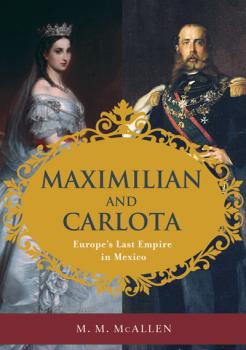
m-and-c-galley-coverAs Trinity University Press prepares to release Maximilian and Carlota: Europe’s Last Empire in Mexico by Mary Margaret McAllen, the Witte Museum is opening a companion exhibit, “Maximilian and Carlota: Last Empire in Mexico,” focusing on the fascinating lives of the ill-fated royal couple. The exhibit of portraits, photographs and artifacts opens on February 1, while the author will read from her book and be available to sign copies during a reception from 4 to 6 p.m. on Saturday, February 8, at The Twig Book Shop.

Fell in love a few year’s ago with C.M. Mayo’s masterful novel, The Last Prince of the Mexico Empire, focusing on a child caught up in the political turmoil – Principe Agustin de Iturbide y Green. A Library Journal review in 2009 perhaps summarizes the complexities involved most succinctly:

Once upon a time, there was a little half-American boy who briefly became heir to the Mexican throne—until his distraught parents sued the doomed Emperor Maximilian for his return.

I highly recommend Mayo’s book, and am looking forward to reading McAllen’s. And if these and the exhibit leave you thirsting for even more glimpses into the lives of Maximilian and Carlota, Mayo maintains an ongoing blog Maximilian ~ Carlota, described as “resources for researchers of the tumultuous period of Mexican history known as the Second Empire, or ‘French Intervention.'”

I’m hoping one of the two authors will suddenly contact me with a sliver of information (a very unlikely record to stumble upon, so am certainly not holding my breath) about a San Antonio connection to the royal rulers. Among the Austro-Hungarians enlisted to serve in support of their reign in Mexico was Baron George Ritter von Tomasini (1818-1912). As the Second Empire of Mexico collapsed, Tomasini and his wife made their way to New Orleans and to San Antonio by 1872. Here, they joined the community of dairy farmers at the Coker Settlement, about which I am writing a book for the Coker Cemetery Association. Geographically, the heart of the Tomasini farm was located where the cluster of shops and restaurants known as The Alley on Bitters are found today.

Eva and George Tomasini, photo from www.thealleyonbitters.com
Eva and George Tomasini, photo from http://www.thealleyonbitters.com

February 3, 2014, Update: Read Steve Bennett’s review of McAllen’s book in the San Antonio Express-News

March 19, 2014, Update: David Martin Davies will moderate a discussion with McAllen from 10 to 10:45 a.m. in the Story Room on the 3rd floor of the Central Library during the San Antonio Book Festival on Saturday, April 5.

January 5, 2016, Update: C.M. Mayo has posted a podcast of a conversation with McAllen recorded in The Twig in October 2015.