Postcard from Oaxaca, Mexico: Sarabia’s narco mixed-media tales fill second floor of MACO

One of the early mixed-media installations of Eduardo Sarabia, a native of Los Angeles living in Guadalajara, tapped into a journey sparked by his grandfather’s map of the rumored buried treasure left behind by Pancho Villa.

That and later stories are included in his current show occupying the entire second floor of the Contemporary Art Museum of Oaxaca (MACO). Traditional forms of Talavera pottery are transformed by symbols associated with narco-trafficking, contrasting the beauty of the culture with the dark undercurrents swirling underneath.

During a 2014 interview published on the website of the Arizona State University Art Museum, Sarabia reflected on the temptations posed by gangs when he was growing up in Los Angeles. A teacher noticed his talent and persuaded his parents to send him to Saturday art classes:

When both your parents are working and you grow up in a bad neighborhood, it is easy to get caught up in these things. Art saves lives.

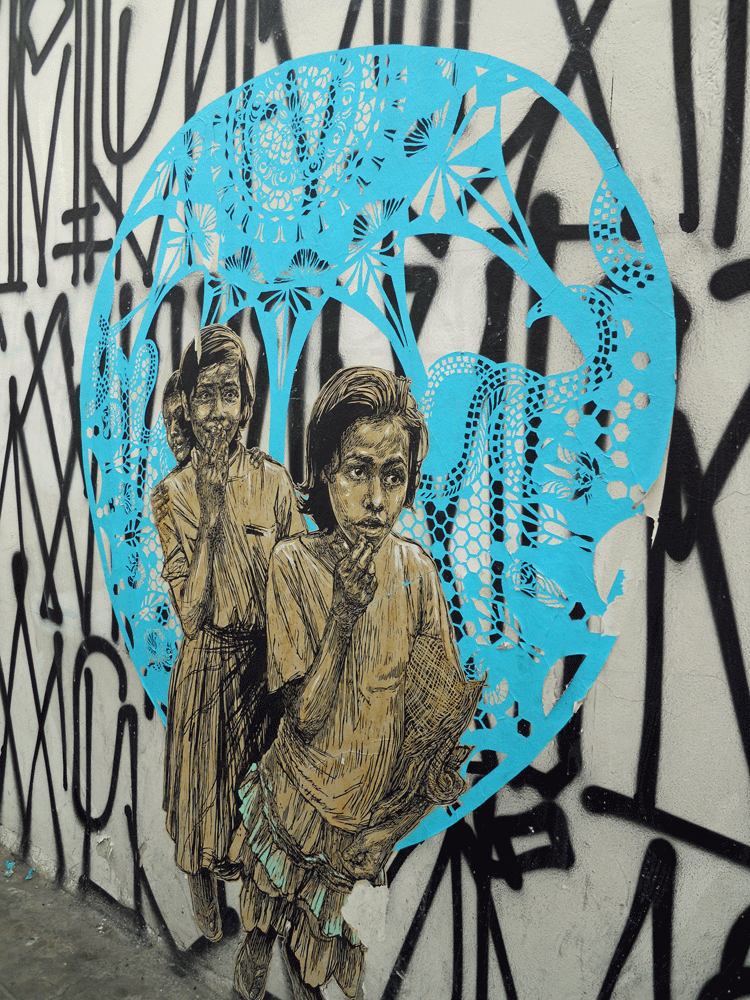
Postcard from Oaxaca: ‘Hecho’ street art invades museum’s colonial walls

The contrast of edgy modern art housed within colonial-era walls is always striking, but even more so at Hecho en Oaxaca, an exhibit bringing urban art into the Museum of Contemporary Art, or MACO, in Oaxaca.

This slideshow requires JavaScript.

As a linguistically challenged blogger, translating websites from Spanish to English to conduct my own research would not be a reliable option. Instead I’ll rely on Carole Turkenick’s words from her Oaxaca Tips (a great, inexpensive resource to pick up at Amate Books the second you arrive in Oaxaca) relay the late-17th or early-18th-century building’s history:

The mansion initially belonged to the noble estates of the Pinelo and Lazo de la Vega families whose coats of arms are engraved in the stone façade on either side of St. Michael Archangel. Following Independence, the structure passed through a series of private owners including in the early 1900s a professor at the local Institute of Sciences and Arts who had the distinction of owning the first automobile in Oaxaca. By the 1970s, the building had seriously deteriorated and was taken over by the state to be converted into a museum of colonial history. The effort failed and the mansion passed to a local civil organization led by Francisco Toledo who together with the National Institute of Fine Arts opened the MACO in 1992. The building was restored again in 2009-2010,

Postcard from Oaxaca: Art of the streets

Wandering the streets of Oaxaca, we keep encountering urban art transcending youthful graffiti.

When we entered the Museum of Contemporary Art, or MACO, our belief the caliber of the art is far from serendipitous was confirmed. Some of the street art is part of an external and internal exhibition, Hecho en Oaxaca, and was commissioned for the July opening.

I’m posting a few random shots, including some commercial signage, separately from those taken inside the museum because a few, by the same artists, would be indistinguishable.

This slideshow requires JavaScript.