A month in Madrid, and we never ran out of museums. Doing a round-up of a few remaining ones so you can see how inexhaustible the supply.
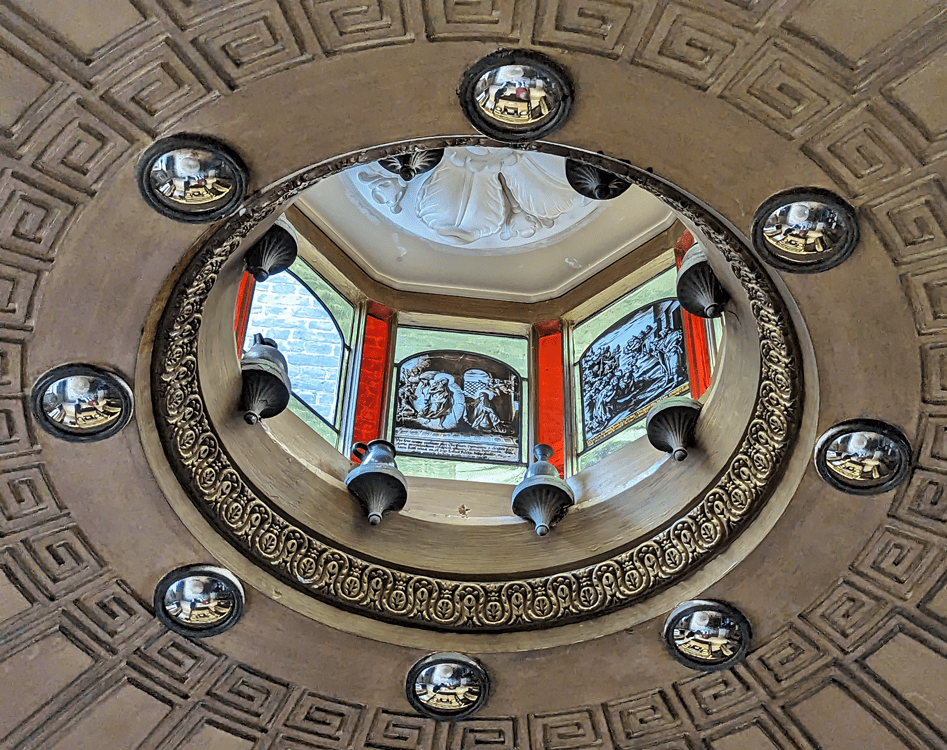
El Museo del Romanticismo is one of several house museums positioning art and collections as though the owners still were present. A glimpse into gender expectations was provided in the toy room: a display case of toy soldiers for boys, a dollhouse full of nuns for girls.
The ballroom of Museo Cerralbo is over the top even for extravagant residences of the 19th century.

Museo Cerralbo

Museo Cerralbo

Museo del Romanticismo

Museo del Romanticismo

Museo del Romanticismo

Museo del Romanticismo

Museo del Romanticismo

Museo Cerralbo

Museo del Romanticismo

Museo Cerralbo

Museo Cerralbo

Museo del Romanticismo “aseo” (toilet) of Ferdinand VII

Museo Cerralbo

Goya’s frescoes in San Antonio de la Florida

Museo Cerralbo

Museo del Romanticismo

Museo Cerralbo

Museo del Romanticismo

Museo del Romanticismo

Museo Cerralbo

Museo Cerralbo

Museo del Romanticismo

Museo del Romanticismo

Museo Cerralbo

Museo del Romanticismo

Museo del Romanticismo

Goya’s frescoes in San Antonio de la Florida

Goya’s frescoes in San Antonio de la Florida

Museo Cerralbo

Museo del Romanticismo

Museo Sorolla

Museo Cerralbo

Museo del Romanticismo

Museo Cerralbo

Museo del Romanticismo

Goya’s frescoes in San Antonio de la Florida

Museo Sorolla
A glimpse into an artist’s life and work is provided in the Museo Sorolla. Joaquin Sorolla y Bastida (1863-1923) preferred to paint his subjects en plein air, trying to capture sunlight instead of artificial light.
Oh, and then there are Goya’s ceiling frescoes and his tomb in San Antonio de la Florida….
And a large collection of art resides in the Museum of the Royal Academy of Fine Arts of San Fernando, or Bellas Artes, because one reason Spain has produced such great artists is the country offered them support. Velazquez painted the royals; Picasso and Dali studied at the academy; and Goya was a director of the Bellas Artes. No photographs were allowed here, but the museum’s labels clearly indicate the politics of art. A Napoleonic tradition of systematically looting art was in play. Many of the pieces hanging on the walls of Bellas Artes are listed as having been retrieved from France after the final eviction of Joseph Bonaparte and the restoration of Ferdinand VII’s rule in the early 1800s.



 Postcards from Barton Springs