Postcard from London, England: Fashion foot forward

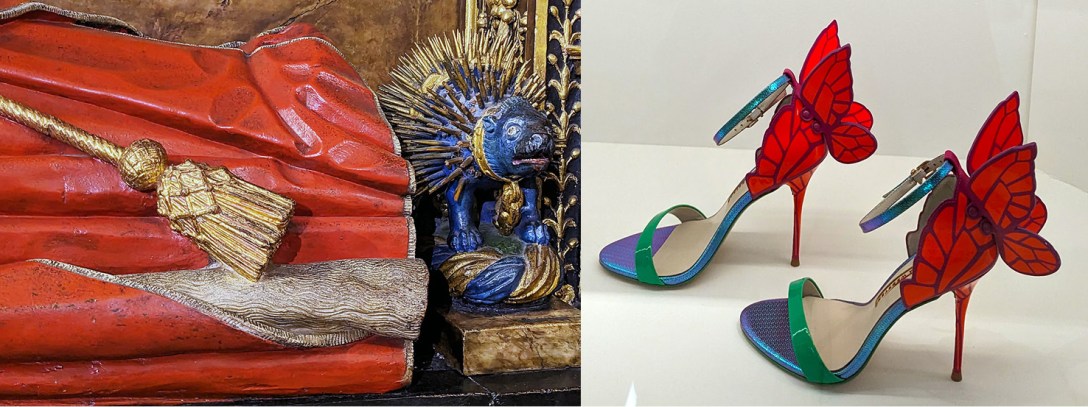
Above left: Hedgehog at the feet of an entombed noble, Westminster Abbey. Above right: Butterfly-wing sandals, Sophia Webster, “Rebel: Thirty Years of London Fashion,” The Design Museum

One might assume I have a foot fetish, as once again I focus on what’s found underfoot of effigies atop monumental tombs of the rich and powerful who occupy prime real estate in churches in Europe. Prior to this, most guardians of the feet we encountered were dogs – beloved lapdogs or prized hunting hounds to offer comfort and protection for the dead.

But the fashion for many of those buried in Westminster Abbey is sculpted to emphasize distinction and convey rank and power. Kings and queens incline toward lions. The regal Scottish red lion posted by Mary Queen of Scots appears assigned to make sure no one attempts to peep up her numerous layers of petticoats.

Continue reading “Postcard from London, England: Fashion foot forward”

Postcard from Naples, Italy: No rest for the dogs

Always drawn to stone effigies of the elite who were wealthy enough to merit entombment in churches. These portraits carry so much more meaning than mere names and dates carved into headstones. They serve as permanent records of earlier fashions, both sartorial and hair. Falcons for the master; perhaps stitchery for the mistress.

Often the interred rest their heads as peacefully as possible on their extra-firm pillows, but what of the poor pooches, condemned to bear the weight of their masters’ feet for eternity? Guesses or knowledgeable responses about the reason for the dog footrests welcomed.


Postcard from Mexico City: Crazy about dogs

A decade or so ago, most dogs one would see in Mexico were barking rooftop guard dogs or skulking strays. In Mexico City, as in the United States, dogs have moved from that earlier working role to assume positions as cherished members of the household.

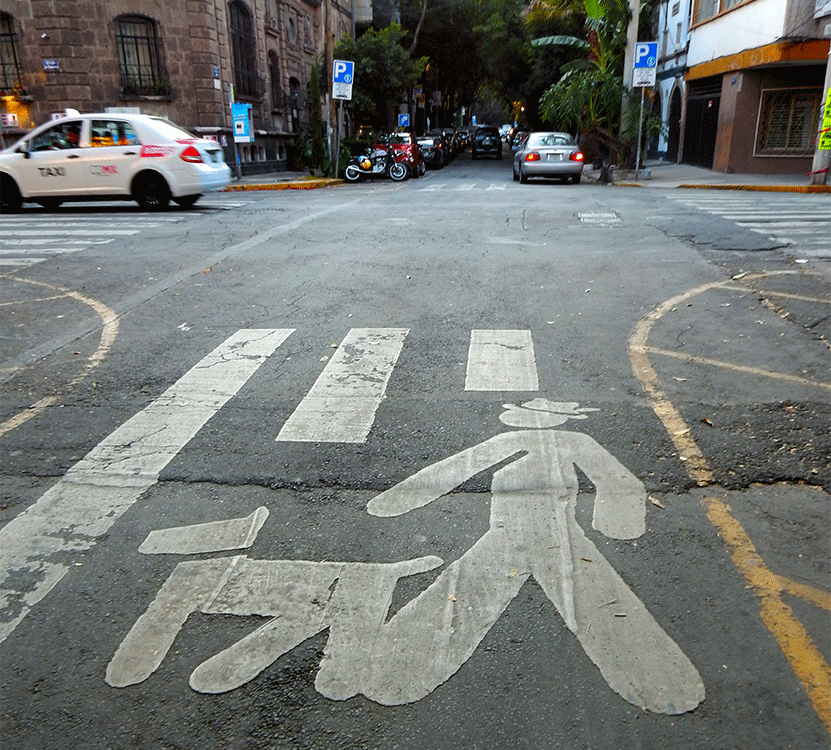
Crosswalks don’t feature adults holding children by the hand but show man walking his best friend. People appear to select their dining destinations by seeking the most pet-friendly patios.

Pet pampering is prevalent. As is school. Dog walkers and trainers fill the sidewalks of Parque Mexico in the Condesa neighborhood with their charges. Their canine pupils are required to abide by a strict honor code. Leashes lie on the ground as the dogs fail to break rank by leaping up to chase after even the sassiest of dogs parading by.

The lofty position of dogs actually is rooted deeply in Mexico’s past. The primary proof of this is the xoloitzcuintli, the ancient breed of dog known as Mexican hairless and often referred to as xolos. Clay figures of them were found in ancient tombs of Mayans, Toltecs and Aztecs where they were placed to fulfill their sacred duties of navigating their masters through the threats posed in the treacherous underworld. Frida Kahlo and Diego Rivera were fond of xolos, and the grounds of the former hacienda of Dolores Olmedo still serve as a breeding preserve for numerous prized xolos who seem eager to socialize with a statue of one.

We think one would have to get to know a xolo well to fall in love with one….