
The Trustees of the Max and Minnie Tomerlin Voelcker Fund are hosting a celebration of the publication of The Last Farm Standing on Buttermilk Hill: Voelcker Roots Run Deep in Hardberger Park from 5 to 7 p.m. on Tuesday, November 16, at The Twig Book Shop, 200 East Grayson at Pearl Brewery. Music Max and Minnie would have loved will be provided by the Lone Star Swingbillies. During the event, 60 percent of any sales of the book will benefit the Phil Hardberger Park Conservancy.
Char Miller, W.M. Keck Professor of Environmental Analysis at Pomona College of Claremont, California, and author of Deep in the Heart of San Antonio: Land and Life in South Texas, wrote: “Few San Antonians remember Buttermilk Hill, but Gayle Spencer has recovered its significance through an intimate portrait of the dairy-farm families who once inhabited the rolling North Side terrain. Only the Voelckers held out against encroaching sprawl, and the result is Hardberger Park, a verdant vestige of the city’s bucolic past.”
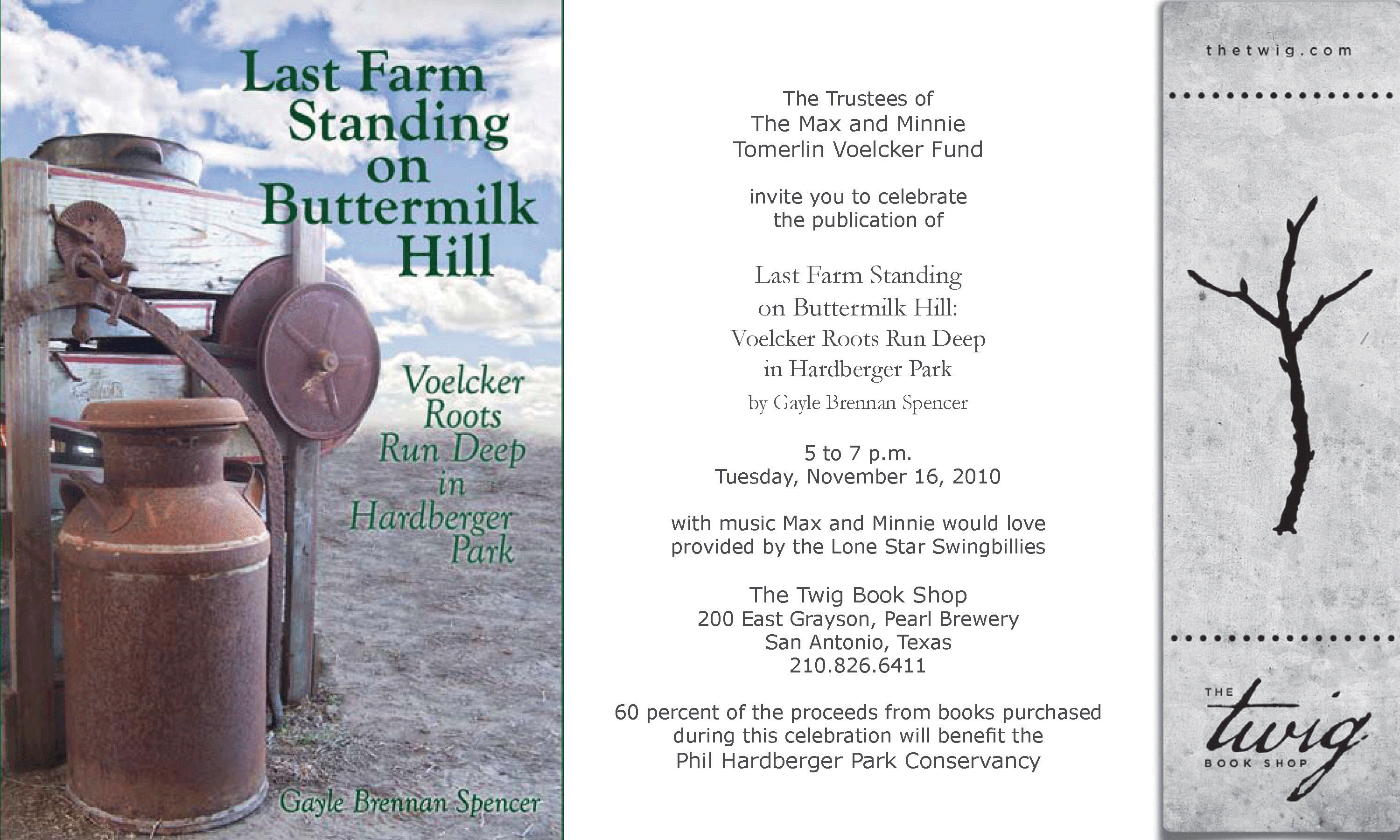
After the Texas Revolution, land grants from the Republic of Texas attracted new settlers to the outskirts of San Antonio. The grandparents of Max and Minnie Tomerlin Voelcker were among those drawn by “gold” to a community known as the Coker Settlement, just north of today’s Loop 410 but, at the time, a full day’s round-trip by wagon on bumpy dirt roads. Unlike that of California, their gold was, first, the opportunity to produce golden butter and, later, the value of the land itself.
By the late 1800s, so many dairies dotted the countryside that the area became known as Buttermilk Hill. Last Farm Standing on Buttermilk Hill traces the early migration to this community and the daily challenges faced by those who farmed the land. Dairy farming involved rising before dawn to churn milk drawn the night before into butter, answering the twice-daily calls from cows in need of milking and driving long distances to deliver cream and butter to city-dwellers. Life was not easy, and nature did not always cooperate.
Max and Minnie both were born on Buttermilk Hill and learned to milk cows almost as soon as they could walk. With farming in their blood, they naturally married from within the Coker settlement.
As dairy farming became big business in Texas, small dairies no longer could compete. But by then, the land itself was so valuable protracted court battles embroiled the Voelckers and their siblings, leaving permanent scars. San Antonio swallowed up one farm after another, until the Voelcker farm, part of which is Phil Hardberger Park, was the last one standing on Buttermilk Hill.
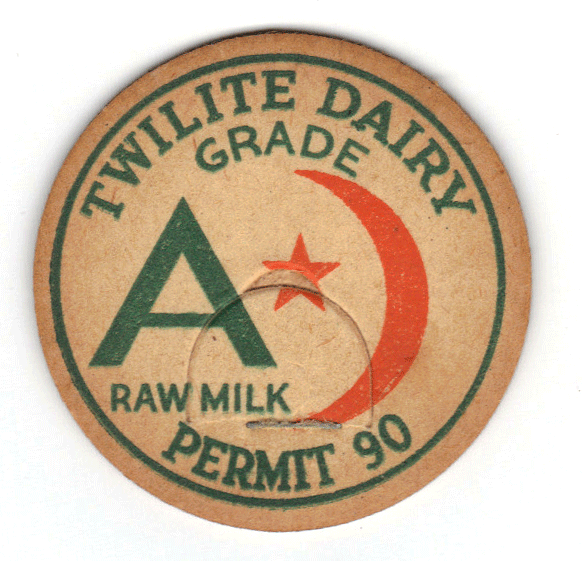 Update on November 9: Unused, there are no remnants of cream glopped onto the back of this wonderful milk bottle cap Carolene dropped by my house. She says (see her comment below) the Twilite Dairy was located out Blanco Road about a mile past Voelcker Lane. That dairy on Buttermilk Hill, which no longer stands, had been owned by Josephine and Onis Lester Harrison (1910-1954), the son of Nancy Cordelia Tomerlin Harrison (1889-1962), Minnie Voelcker’s half-sister.
Update on November 14: Ed Conroy’s review in the Express-News is better written than the book itself.


 Postcards from Barton Springs