Remembering everyday people: Our rural heritage merits attention

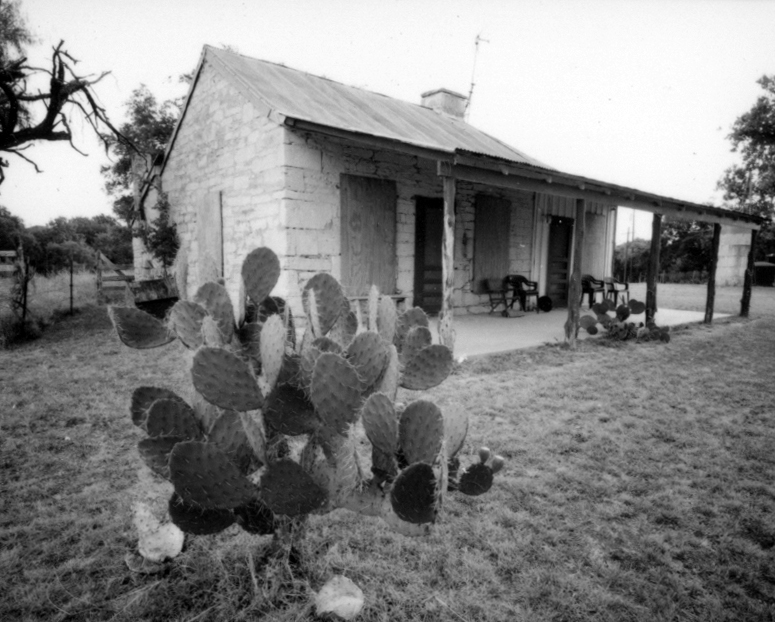
Photograph of the old rock house on the Voelcker Farm taken by Dudley Harris for "Last Farm Standing on Buttermilk Hill"
Photograph of the old rock house on the Voelcker Farm taken by Dudley Harris from “Last Farm Standing on Buttermilk Hill”

Max and Minnie Tomerlin Voelcker loved and fiercely protected their land from encroaching, encircling development swallowing up neighboring farms. The towering trees shading walkers in Phil Hardberger Park result from their stewardship.

Max and Minnie were not well-known in San Antonio, unless you were a frustrated real estate developer trying to court them. They were just plain, ordinary people. Like most of us.

Photograph by Dudley Harris of the Voelcker Dairy barn for "Last Farm Standing on Buttermilk Hill"
Photograph by Dudley Harris of the Voelcker Dairy barn from “Last Farm Standing on Buttermilk Hill”

What the retired dairy farmers never would have envisioned is that their old farm would end up safeguarded by the city that endangered it. The city’s Office of Historic Preservation has submitted a nomination to include the farmstead on the National Register of Historic Places, according to Preservation News:

The Max and Minnie Voelcker Dairy Farm, located in San Antonio’s Phil Hardberger Park, was nominated to the National Register of Historic Places this past spring. The farmstead exemplifies a turn-of-the-century agricultural landscape with preserved late nineteenth and early twentieth century buildings. The State Board of Review met on May 17, 2014, in Austin to review the application.  The Office of Historic Preservation (OHP) received a matching $10,000 Certified Local Government Grant to hire a consultant to prepare the nomination. The nomination assessment was prepared by Brandy Harris, M. Kelley Russell, Lila Knight, Ryan Fennell, Nesta Anderson, and Karissa Basse. The $10,000 grant was matched in-kind by the OHP through the execution of a survey in the West Sector Plan area of the city.  OHP staff members involved in the survey included Adriana Ziga, Kay Hindes, and OHP volunteer Brenda Laureano.  The nomination will now move forward to the National Park Service.

last-farm-coverI never met Max and Minnie but was offered the opportunity to delve into their lives deeply when retained by the Max and Minnie Tomerlin Voelcker Fund to tell their story. The resulting book, Last Farm Standing on Buttermilk Hill, in turn led me to even more concentrated involvement in the history of the dairy farms that surrounded the Voelcker Farm on San Antonio’s near north side.

As I struggle to uncover bits and pieces of the lives of their neighbors from the Coker Settlement resting beside them in the Coker Cemetery and weave them together into a new book for the Coker Cemetery Association, I am grateful for that introduction to Max and Minnie. Getting to know them and digging into the past of the Coker Settlement has given me incredible respect for the tough-skinned early residents farming on the outskirts of San Antonio.

Life was hard for those pioneering farmers, and it’s wonderful the Voelcker Farmstead has been spared as testimony of the city’s vanishing rural heritage.

deer
Coker Cemetery

San Antonio Book Festival: Lifting authors from book jackets into your Library

The quotes on the back of the book are from Dan Rather, Ken Burns, Jim Lehrer and Bob Schieffer. Pretty impressive for a story about a San Antonio family.

harnessmaker_cover_smThe lives of everyone are interesting, but most take their untold stories with them to their graves.

The Kallison family, however, was fortunate to count a Pulitzer Prize-winning journalist among its offspring – Nick Kotz. His book, The Harness Maker’s Dream: Nathan Kallison and the Rise of South Texas, was published by TCU Press in 2013.

The harness maker, who had emigrated to Chicago to escape persecution in the Ukraine in 1890, sensed the automobile would soon begin to dramatically impact his business. Nathan Kallison and his wife Anna were uncertain what direction to head until an older couple assured them that, in San Antonio, “the weather is mild, and there are more horses than people.” So, in 1899, the family moved to South Flores Street and opened a saddlery shop, increasingly expanding to cater to the diverse needs of South Texas farmers and ranchers.

As I struggle to encompass the families of the Coker Settlement into the confines of a book, I picked up Kotz’s book last week to see how someone who devoted years to honing his journalistic skills handles a regional story of one family while making it applicable to the experiences of others. Although I am not yet finished, the San Antonio Public Library Foundation is giving me the opportunity to hear from Kotz firsthand on Saturday.

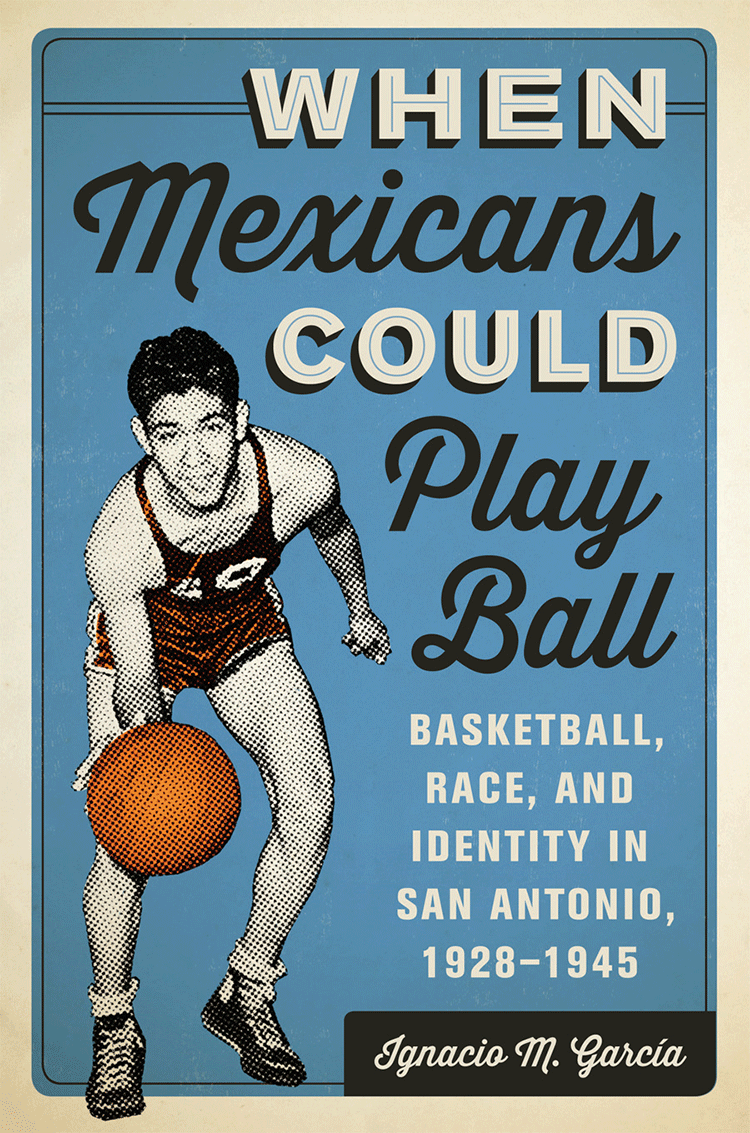
play-ballAs part of the San Antonio Book Festival, Kotz will appear on a panel with Ignacio Garcia, author of When Mexicans Could Play Ball: Basketball, Race and Identity in San Antonio, 1928-1945, with Gilbert Garcia of the San Antonio Express-News serving as their moderator. The topic they will discuss from noon to 1 p.m. in the Auditorium of the Central Library is Our Town: Stories that Shaped San Antonio.

More than 90 authors will be featured during the one-day Book Festival, and, amazingly, it’s admission-free. Decision-making about which sessions to attend is the dilemma. But this year, mapping out strategies is simplified by the user-friendly schedule on the Library Foundation’s website and a great free app. Go to Event Base in your app store; download it; then click on the “San Antonio Book Festival” tab.

Just happened to have written recently about two other authors appearing during the festival – Mary Margaret McAllen and Duncan Tonatiuh. And, from several years ago, a post about the wonderful tales Jake Silverstein spins in Nothing Happened and Then It Did.

And, although there is a small fee, the Literary Death Match sounds as though it should be a stimulating way to end the day. The Library Foundation website describes the event:

Literary Death Match marries the literary and performative aspects of Def Poetry Jam, rapier-witted quips of American Idol’s judging (without any meanness), and the ridiculousness and hilarity of Double Dare. Each episode of this competitive, humor-centric reading series features a thrilling mix of four famous and emerging authors (all representing a literary publication, press or concern — online, in print or live) who perform their most electric writing in seven minutes or less before a lively audience and a panel of three all-star judges.

After each pair of readings, the judges — focused on literary merit, performance and intangibles — take turns spouting hilarious, off-the-wall commentary about each story, then select their favorite to advance to the finals.The two finalists then compete in the Literary Death Match finale, which trades in the show’s literary sensibility for an absurd and comical climax to determine who takes home the Literary Death Match crown.

It may sound like a circus — and that’s half the point. Literary Death Match is passionate about inspecting new and innovative ways to present text off the page, and the most fascinating part about the LDM is how seriously attentive the audience is during each reading. We’ve called this the great literary ruse: an audacious and inviting title, a harebrained finale, but in-between the judging creates a relationship with the viewer as a judge themselves.

litarary-death-matchHey, when a musical group with a name like Cryin D.T. Buffkin and the Bad Breath performs, you know you don’t want to miss it.

Photographs from the 1800s place faces on the names found in the registry of Zephaniah Conner’s Bible

Louisa Ann Godwin Conner in mourning for her husband Zephaniah Turner Conner, who died in 1866 in Macon, Georgia, after serving as a Colonel for the Confederacy

Diligently pursuing “Indian depredations” (by Native Americans who objected to the State of Texas having awarded their land to others) around the Coker Settlement on the north side of San Antonio, I paused to look for the copy of The Memoirs of Mary A. Maverick.

And there it was. Not the memoirs, but the small leather-bound, gilded album with photographs of the Conners. Seriously old photos, primarily taken in Macon, Georgia, between the 1860s and the late 1800s.

These will be of little interest to most people unless you are a Conner descendant, but for those, wherever they are, I wanted to post a few of the photos of family members whose births and departures are recorded in Zephaniah Conner’s Family Bible – the behemoth one dating from 1831 featured in this “Older than Methuselah” blogpost, in which you can find out more about this particular branch of the Mister’s ancestors.

This slideshow requires JavaScript.

Now, where was I with those restless natives in Texas?

Maybe it will be less distracting to read Mary Maverick’s memoirs online….

July 7, 2016, Update: John Banks wrote a wonderful piece on his blog addressing the Civil War experiences of William Allis Hopson fighting for the South and his younger brother, Edward, fighting for the Union.