

A birdman caged underground for more than 1,000 years, Cacaxtla’s powerful priest of Quetzalcoatl now can be viewed in an archaeological site outside the town of San Miguel del Milagro, Tlaxcala, Mexico’s smallest state. Dressed in the guise of an eagle and surfing atop a feathered serpent, the priest was not uncovered until the 1970s.
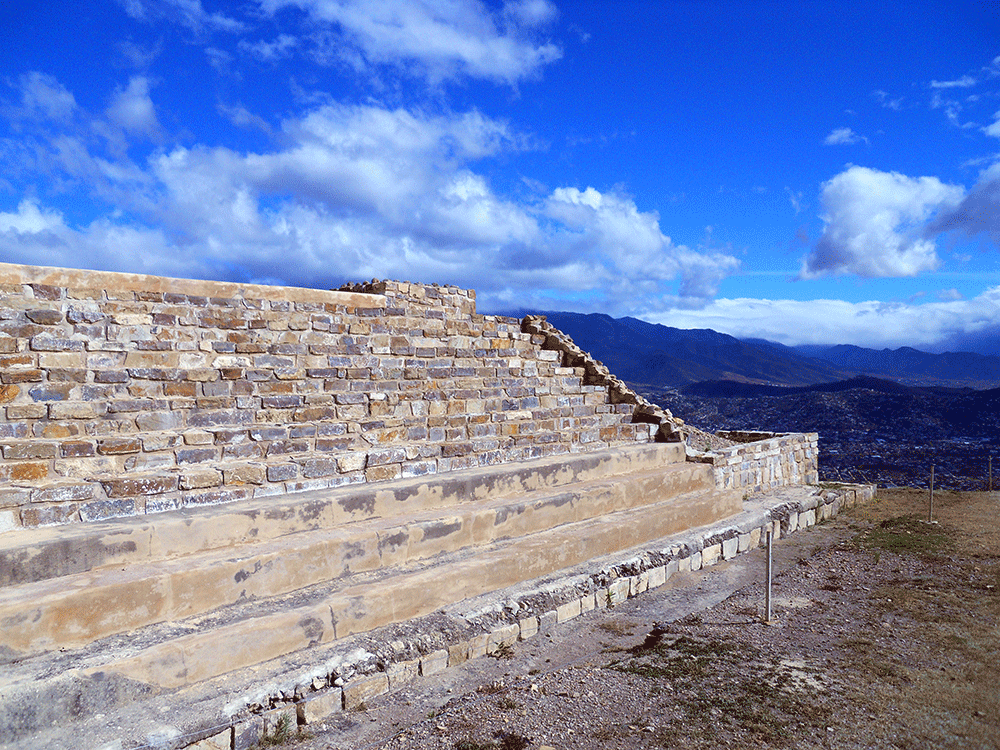
The pyramid containing the best-preserved pre-Columbian murals recovered to date in this hemisphere is still undergoing restoration. The beehive of archaeological activity involves backbreaking labor seemingly not much different from that involved in the original construction. Yes, wheelbarrows are used, but they only cart the workers’ heavy loads to the bottom of the first step. Close to 100 men and women were scurrying on site in what must be a major public works boon to the small town’s economy.
The peaceful, hilly town of Tlaxcala City itself is a refuge for those from Mexico City, meaning tony shops and restaurants are tucked behind some of the humble-seeming facades.


But we pressed on, a lunch destination in mind. We headed to Apizaco to find Chef Francisco Molina’s Evoka, a restaurant many hail as among the most outstanding in all of Mexico. The chef is known for elevating regional ingredients and traditional dishes of Tlaxcala to new heights, and he did not let us down.
Pleased by a trio of amuse-bouche and emboldened by a mysterious mezcal margarita and a mojito de toronjil (melon liqueur, ancho reyes and lemon balm), we decided this was the place to experience one of those insect dishes we had yet to try. Yes, we’ve consumed grasshoppers and chicatanas numerous times, but never escamoles. The caviar-like delicacies prized since the time of Quetzalcoatl are eggs stolen from venomous giant ants inhabiting the root systems of agave plants. The volcan de escamoles emerging from the kitchen is a chaulpa layering the large eggs with beans, wild mushrooms harvested from the slopes of the nearby Malinche volcano, artisanal cheese and avocado. Quite a refreshingly tasty combination.
Our main courses were chicken with cilantro pesto and robalo with adobo sauce steamed in mixotes, packages of agave skin, with an assortment of vegetables harvested from the restaurant’s garden. We finished the feast with a quartet of nieves, scoops of house-made lemon balm and strawberry sorbets and hoja santa and dried corn ice cream.
Definitely worth a detour.


 Postcards from Barton Springs