
The pains of death are past.
Labor and sorrow cease.
And life’s long warfare closed at last.
His soul is found in peace.
Headstone of Joseph Coker, 1799-1881
One day I found myself, sitting in the middle of the carpet surrounded by boxes stacked in an attorney’s office on the 30th floor, rooting through another woman’s purse.
This really was not a planned direction for my career, but, undisciplined, I have always let it take numerous unscheduled detours.
I wanted the vintage pocketbook to spill the story of Minnie Tomerlin Voelcker out on the floor in front of me. Although its contents provided tiny glimpses of her personality, it was going to take a lot more time and effort to flesh out her and husband Max. Thanks to the Max and Minnie Tomerlin Voelcker Fund, I devoted two years to getting acquainted with the two hardworking dairy farmers who reside in the Coker Cemetery, resulting in the publication of The Last Farm Standing on Buttermilk Hill: Voelcker Roots Run Deep in Hardberger Park.
The Voelckers’ farm was part of a community of dairy farmers clustered together just north of Loop 410 in San Antonio. These families were unified by school, church and graveyard into a tightly knit community – the Coker settlement, and the Coker Cemetery Association plans to reunite these families in a book.
Farewell, my wife
and children all,
From you a Father
Christ doth call.
Headstone of James J. Tomerlin, 1858-1896
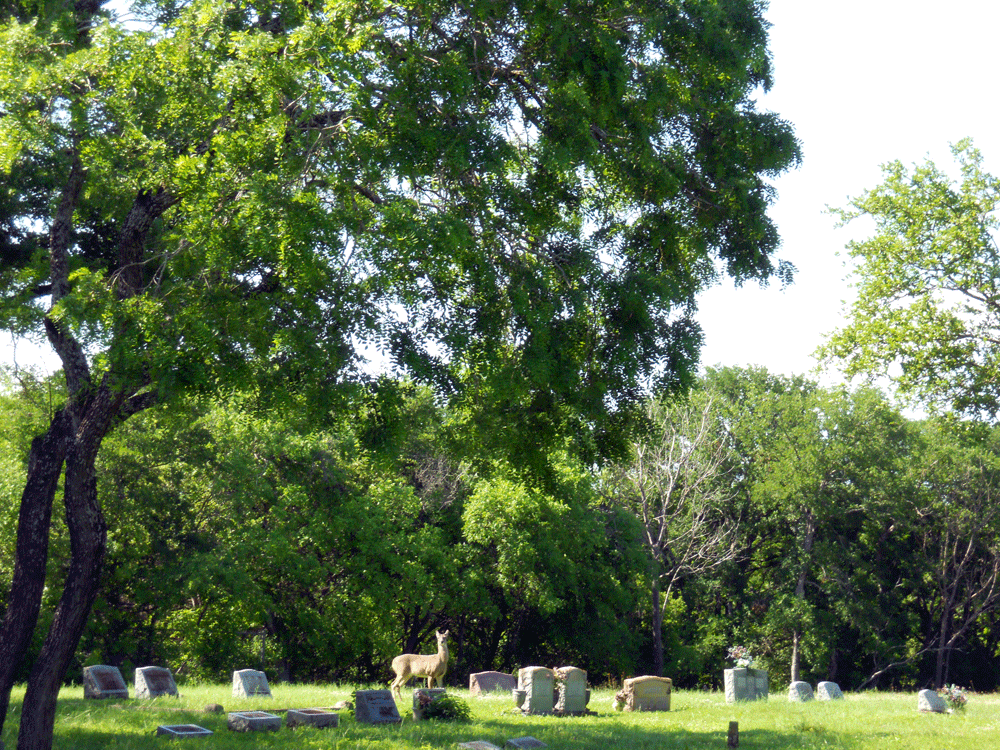
As the Voelckers did, many of these hardworking farmers retired to the Coker Cemetery. I went to visit them recently, hoping they would whisper tales to me.
The jarring sounds of bulldozers working on the new portion of Wurzbach Parkway crashing through the former farms at first spoiled the peacefulness. But the spirits in this bucolic setting gradually quashed the intrusive noise, leaving me and several deer free to wander in the past.
The hours spent in the Coker Cemetery revealed some of the names of the farming families populating the settlement: Coker, Gerfers, Hampton, Harrison, Jones, Marmon, Smith, Tomerlin, Autry, Dekunder, Gulick, Harper, Isom, Maltsberger, Pipes, Tomasini and Voelcker. While their dairies in the area known as Buttermilk Hill were swallowed by behemoth San Antonio, the nonprofit association maintaining this historical cemetery knows their stories merit preservation.
As families dispersed from farms, remnants of the area’s history scattered with them. The Coker Cemetery Association asked me to bring these back together as a gift to the descendents of all who rest under the tombstones behind the old Coker church.
Charged with weaving bits of historical information together to illuminate this oft-forgotten portion of San Antonio’s rural heritage, I find myself again looking for chards. A page recording births and weddings in a family Bible. A brand registration from the late 1800s. A class photo from the old Coker schoolhouse. A tax return from the 1920s. A long-forgotten diary or letters tucked away in a shoebox. Memories grandparents shared about families’ arrivals in San Antonio or life on the farm.
I am asking descendants to introduce me to their ancestors from the Coker community, to search their studies, basements and attics and dust off the cobwebs in their minds to share memories and artifacts for this project. To ensure their ancestors are:
Gone but not forgotten.
Headstone of Rebecca Ford, 1823-1881
Thank goodness for detours, always full of unexpected opportunities and discoveries.
 Postcards from Barton Springs