Postcard from San Miguel de Allende: Redirecting Grafitti Artists, Part Two

(Link to Part One)

Blank walls are magnets for graffiti, but treating those walls as a canvas for public art projects commands respect even among taggers.

To try to halt the spread of random graffiti and alter the urban landscape, Colleen Sorenson joined with Federico Vega to launch Muros en Blanco in San Miguel de Allende. They met with city leaders, including Mayor Mauricio Trejo Pureco, and convinced them to establish Colonia Guadalupe as the city’s first arts district.

Enthusiasm was so high, they were given virtually no time to throw together the new arts district’s first event and public art projects in March of 2013. First, the pair had to identify walls appropriate for the murals and obtain permission from property owners for the project. Then they turned to the internet to solicit lead artists from throughout Mexico and beyond – Germany, Argentina, the United States. The chosen artists were housed with neighbors, neighbors who also rose to the occasion to prepare potluck feasts spread out as buffets for the starving teams of artists who gathered for meals in Colleen’s patio. Youths of the community were given the opportunity to join and work under the tutelage of more experienced artists.

Here are some of the results:

This slideshow requires JavaScript.

Look for more photos of murals in Colonia Guadalupe in Part Three.


Postcard from San Miguel de Allende: Redirecting Grafitti Artists, Part One

Several years ago, Colleen Sorenson fell under the spell of a colorful, compact neighborhood of homes, Colonia Guadalupe, increasingly attracting artists priced out of the center of San Miguel de Allende.

She loves it but began to be alarmed by some of what she saw surfacing on buildings all around her. Tagged walls and graffiti attacks on property without permission damage the fabric of a neighborhood.


This slideshow requires JavaScript.

But Colleen had seen this before in San Antonio, and she knew there were remedies. She was determined to corral the talent behind some of those marred walls, redirecting taggers toward more positive forms of artistic expression.

The gringa transplant with little command of Spanish has made a huge impact on her adopted home in an extremely short time. And, whether working class or artist, everyone on every corner in Colonia Guadalupe seems to know her name.

Some of the results of her efforts, both grassroots and at city hall, will be seen in a series of forthcoming posts.


Postcard from San Miguel: Hoping for miracles

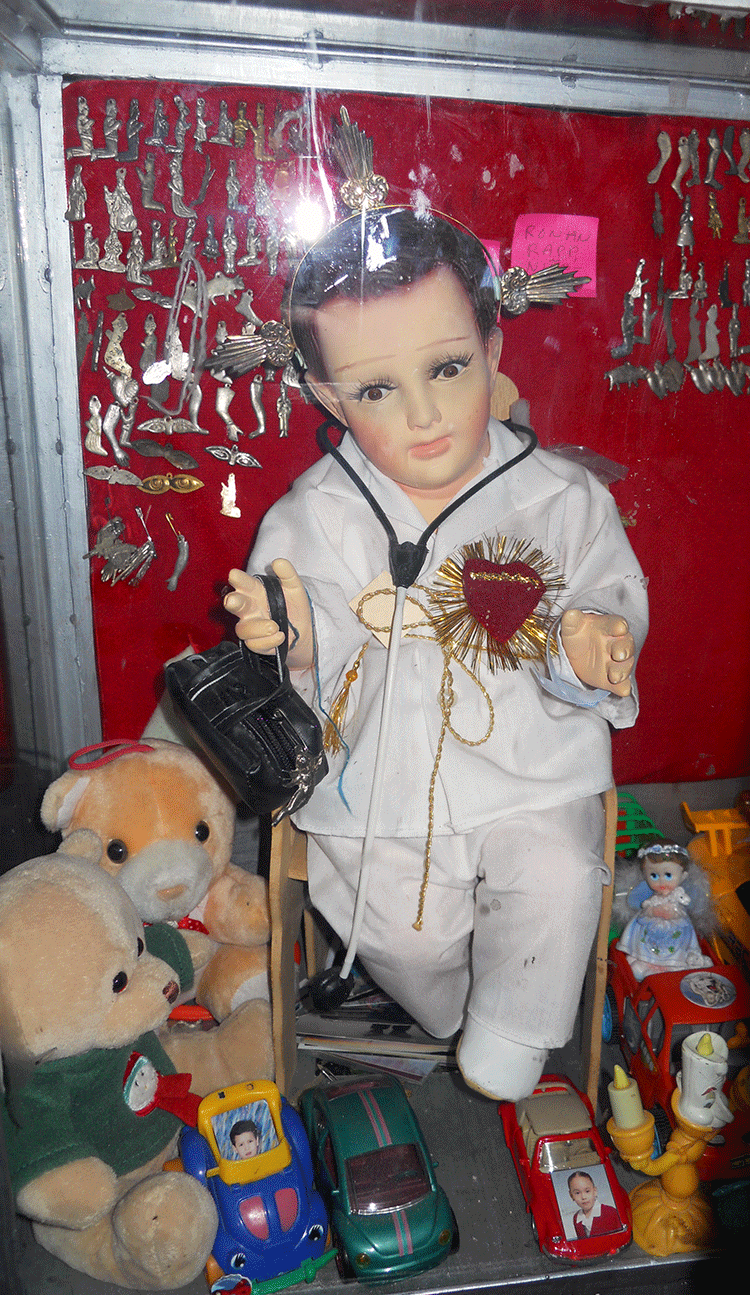
Prayers for miraculous interventions in Mexico often are accompanied by physical demonstrations of the faith behind them – silver milagros, votive candles, written notes, photographs of loved ones – as though the saints above need reminders lest they forget the requests.

Statues of St. Jude Thaddeus attract desperate pleas for hopeless or lost causes, of which there seem to be no shortage of loved ones fitting in this category. But the ones hitting the hardest are photos of children and toys left with prayers to El Nino. The Mister first pointed this out to me decades ago in Guanajuato, as I watched a Chiclet-selling boy longingly eying the toys locked inside a glass case with a statue of El Nino.

This slideshow requires JavaScript.

The churches in San Miguel de Allende are filled with similar offerings. These photographs are from the Church of Immaculate Conception, or Las Monjas, in San Miguel de Allende.

Construction of the convent was begun in 1755, funded by Maria Josefa de la Canal as a monumental demonstration of her faith. The crowning dome, inspired by Les Invalides in Paris, was not added until the late 1800s.