Postcard from Porto: Following the compass into the Old World

The timeline of recorded history takes on such added depth in Europe, and nothing reminds you of your own new-worldliness faster than the ancient stone walls of a towering cathedral, perched high on a hilltop and guarded by a giant knight renowned for his service battling the Moors.

The first of the Romanesque walls of the Cathedral, or Se, of Porto, Portugal, were erected in 1110. Of course, centuries of alterations and additions transformed the original design by contributing Gothic and Baroque details, many with layers of gilding gleaned from expeditions to the New World.

Following King John I’s 1387 marriage to Princess Philippa of Lancaster, he began construction of the adjoining Gothic cloister. The distinctive blue tile murals, azulejos, chronicle everything from the life of the Virgin Mary to the flirtatious ways of courtesans.

This slideshow requires JavaScript.

Encouraged by the French, Spanish soldiers briefly seized control of the Cathedral in 1801 during the War of the Oranges, one of a long list of reasons for long-term hard feelings lingering between the Portuguese and the Spanish.

It is said a marble plaque installed by the altar afterwards contains magnetite to disrupt the compasses of invaders; the needle points not northward but to the altar of God.

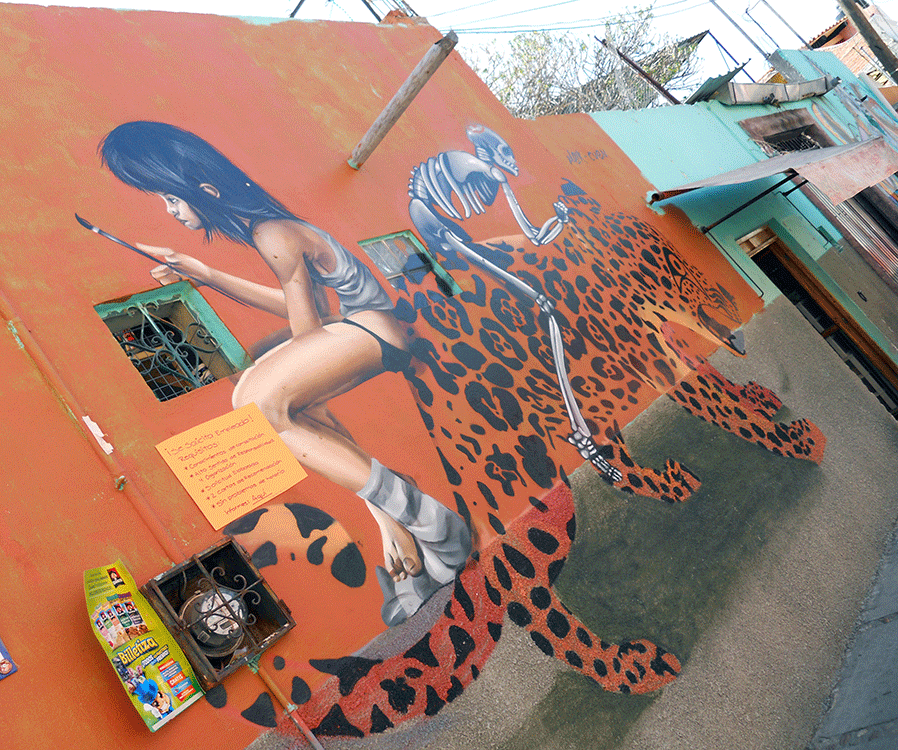
Postcards from San Miguel de Allende: Redirecting Grafitti Artists, Part Four

Part One, Part Two and Part Three

Some people see the arroyo of Obraje running through San Miguel de Allende as a squalid ditch, a place to dump household garbage when one fails to heed the bell of the municipal trucks collecting trash. It diverts floodwaters away from Colonia Guadalupe during the rainy season, but during the much longer dry season it serves as a shortcut for many, including children attending one of several schools bordering the arroyo. The area, well below street level, also is a magnet for those engaged in drug deals or other dangerous liaisons. And those armed with spray paint.

Former San Antonian Colleen Sorenson looks at the ditch and sees something different. She sees Paseo del Rio or pathways like those along the Mission Reach of the San Antonio River. The graffiti-covered walls of buildings backing up to the arroyo represent additional blank canvases for more constructive artistic expression. Muros en Blanco, ecologically concerned residents of San Miguel de Allende and city officials began meeting, and change is happening.

This slideshow requires JavaScript.

Bulldozers were clearing away debris in February, when these photos were taken.

According to an article by Antonio de Jesus Aguado in Attencion San Miguel, Edgar Bautista, head of the city’s Urban Development Department, said:

“The perspective is touristic…,” and it fulfills the development goals of the Millenium, the priorities of which are security, health and education. The idea is to turn the arroyo into a patio-garden within the city, a tourism corridor, “in other words, a park that would generate a new ecosystem as important as Parque Juarez.”

Colleen was working on another arts festival, but, in addition to the mural projects lining the arroyo, the event would involve the schools in Colonia Guadalupe and carry strong environmental messages to foster a spirit of community stewardship.

Looking forward to seeing the transformation next time we return….


Postcard from San Miguel de Allende: Redirecting Graffiti Artists, Part Three

Part One

Part Two

The murals completed during this past year as part of Muros en Blanco have altered the appearance of the neighborhood, increased the sense of shared community and possibly changed the lives of some of participating youths.

Tourists traditionally have remained in the Centro Historico of San Miguel de Allende or ventured only as far out as Fabrica la Aurora. Some of them now stroll into the heart of Colonia Guadalupe in search of the murals and studios of artists working in the neighborhood. The dining rooms of Via Organica are packed.

And, most importantly, there is an added layer of communal interaction among expats living there and Mexicans whose families have resided in Colonia Guadalupe for generations.

This slideshow requires JavaScript.

And more murals are on the way this month as part of the second festival. But this spring’s festival is about more than art. Part Four will be posted soon.