Postcard from Edzna, Campeche, Mexico: Wandering amidst ancient Mayan ruins without the crowds

As incredible as the extensive ruins of Chichen Itza in the Yucatan are, the experience of visiting them is somewhat spoiled. The site is overrun by hundreds of stalls of vendors and swarmed by busloads of tourists.

But there is another spot to visit the Mayan home of the Itza family – Edzna, less than an hour outside of Campeche. Edzna means the House of Itzas, so named because the Itzas lived here before setting up quarters at Chichen Itza. At Edzna, one has to wait around for a while for someone to walk into the camera frame to provide a sense of scale. There were maybe five cars in the parking area.

Construction on the site began around 600 B.C., with the ancient Mayan city expanding to close to ten square miles at its peak of power. The satellite image plucked from Google maps illustrates the small portion of that territory that has been excavated.

The site particularly is noteworthy for its sophisticated system for capturing, storing and distributing rainwater. Hieroglyphics at the foot of its main structure, Edifico de los Cinco Pisos, trace its construction to 652, but additions and alterations were made up until the 14th century. From the base to the top of its comb, similar to toppings at Palenque, the structure measures more than 100 feet high.

Although Edzna was occupied until the 15th century, it was not rediscovered until 1907. Excavation began in 1958, with much of the caretaking services in recent years provided by Guatemalan refugees under the watchful eyes of the resident iguanas.
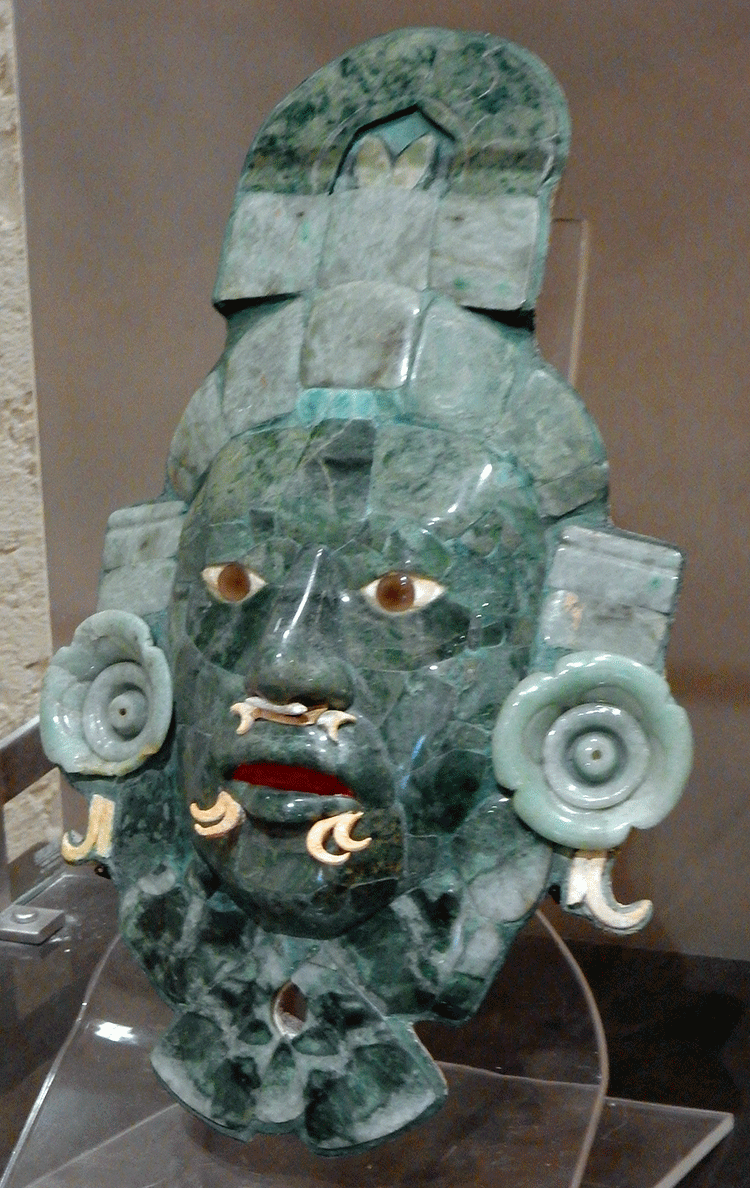
Postcard from Campeche, Mexico: Masking death to attain immortality

The quest for eternal life. We’re not sure it worked for the elite dignitary who wore the jade face of a divinity into the depths of his tomb at Calakamel almost 2,000 years ago, but the jade has a lasting power of its own. Following the Calakamel mask’s vacation trip to Paris and Mexico City, the impressive jade relic kindly returned home to Campeche in time for our visit.

In preparation for an excursion to one of the ancient Mayan sites, we toured both of Campeche’s archaeological museums: Museo Arquelogico de Campeche housed in the ancient Fuerte de San Miguel, one of the fortifications built to frustrate pirate attacks, and Baluarte de la Soledad in the base of one of the city’s gates. The two collections are small but significant, and both are well explained and well displayed.

A jade mask would be a pretty expensive fountain of youth purchase today, but short-term mortal appearance appears to take priority over dreams of immortality. Retin-A might represent a bargain alternative.

Postcard from Campeche, Mexico: Modern-Day Pirates

Following in the tradition of the infamous marauding filibusteros – including John Hawkins, Francis Drake, Henry Morgan and Laurens de Graaf – preceding them, waterbirds appear to have commandeered some of the fishing fleet in Campeche.

The cormorants and pelicans granted us safe passage along the Malecon, a pathway with ample lanes for bicyclists, runners and pedestrians skirting the bay for several miles.

Most importantly, Campeche is proving a safe harbor sheltering us from an over-abundance of political updates.