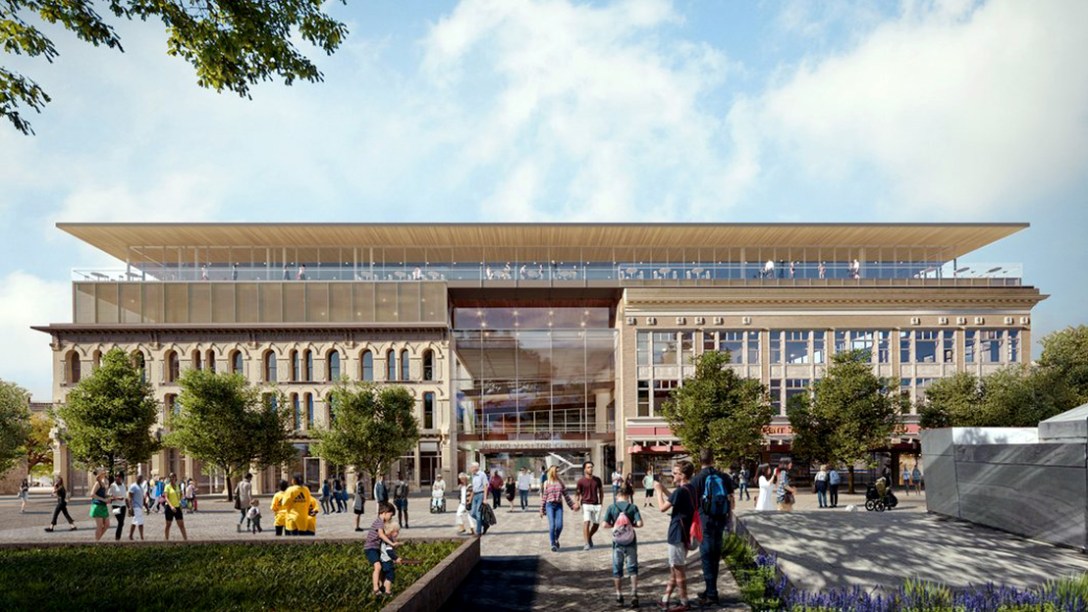
Above: Rendering of plans for the Alamo Visitor Center and Museum from the Alamo Trust
Recent international trends in museum design and development have emphasized the reuse and transformation of historic industrial and commercial buildings for interpretive programming, providing stronger links between complex layers of history and dynamic visitor experiences. Through the historic preservation treatments of exterior restoration and interior rehabilitation, these three buildings on Alamo Plaza can provide the opportunity for a unique twenty-first century museum experience that is innovatively housed within some of San Antonio’s most historically significant commercial architecture of the nineteenth and early twentieth centuries.
“Historical Assessment of a Trio of Historic Buildings on the West Side of Alamo Plaza,” John G. Waite Associates’ study commissioned by the Alamo Trust, 2020
The Crockett Block (1882); the Palace Theater (1923); and the Woolworth Building (1921). All three recognized as significant historic landmarks in San Antonio and nationally. The 2020 evaluation by John G. Waite Associates let preservationists breathe a bit easier.
A cause for celebration: The block is no longer in danger of complete demolition to make way for a new museum directly across the plaza from the Alamo Chapel. The rendering at the top of this post is the current one espoused by the Alamo Trust. Most of this complex on the west side of Alamo Plaza will be transformed into a handsome museum and visitors center designed by a team of architects and designers from internationally renowned Gensler and San Antonio-based GRG Architecture.
In addition to private donations, the overall Alamo Plan is receiving an amazingly generous boost in the Texas State Budget – a whopping $400-million. In other words, the museum, preservation of the Alamo itself and redo of Alamo Plaza are all moving forward.
Continue reading “Postcard from San Antonio, Texas: Time to toast the Alamo Trust” →




 Postcards from Barton Springs