Postcard from Oaxaca, Mexico: El Dia de los Rabanos

The deep red of radishes is appealing, but the wallflowers always remain in a lonely cluster on the relish tray as parties wind down. Strong on flavor, a little bit of radish goes a long way in a dish.

So the concept of a radish festival conjures up images of being force-fed radishes from one food booth after another.

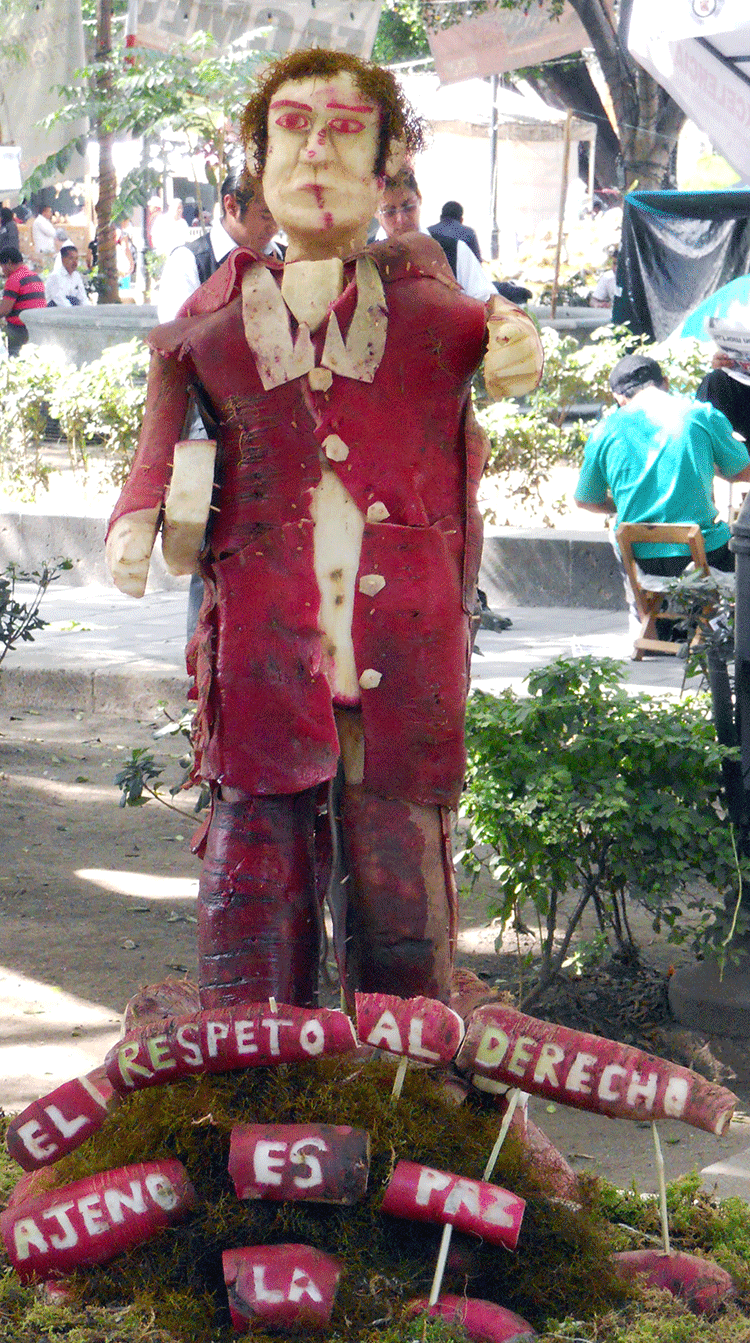
But, lo and behold, a couple of centuries ago, some wise priest found a way to dispose of hundreds of radishes in one fell swoop. The padre elevated the slicing and dicing of the maligned root vegetable to an art form, challenging his indigenous flock to sculpt them into figurative works for a competition held right before Christmas.

And the unusual one-day arts festival, El Dia de los Rabanos, has been going strong ever since. So strong it attracts somewhere in the neighborhood of 100,000 people to crowd into the Zocolo and line up for hours on the night of December 23 for the opportunity to file by for close-up views of the elaborate displays.

We arrived before noon to observe artists assembling their exhibits crafted from radishes of all sizes – petite to nightmarishly huge. Other categories in the competition included corn husk and dried flower creations.

While it seems unfair to show the artists’ work before they were complete, these photos should give you an idea of how ravishing the finished radish sculptures would be. When we returned to the Zocolo last night, the huge crowd patiently waiting in lines snaking across to the adjoining plaza in front of the Cathedral made us thirsty. Photos of the finished displays will have to be viewed on other websites manned by more persistent fans who can resist that zesty Margarita’s call.

What appears at first glance to be festive banners flapping in the breeze behind the artists’ booths are not. Look again. They are banners bearing images of the 43 missing students from the state of Guerrero. Peaceful protesters’ pup-tents still occupy the heart of the Zocolo, even in the midst of the all the festivities.

But that’s always been part of the magic of the Zocolo in Oaxaca. The city’s main plaza is used by everyone. Seemingly incongruous activities occur simultaneously. Layers last night included the encamped normalistas in the middle surrounded by the radish booths, encircled by wandering vendors of rebozos and balloons, all surrounded by tables of diners and drinkers. A large musical troupe played exuberant holiday music, as a group transporting a statue of the Virgin aloft sang religious rituals outside a side door of the Cathedral only a few yards away.

And then add in thousands of spectators. Yet it was all easy to maneuver through.

The Zocolo accommodates and welcomes all, no matter what their reasons for gathering there.


Postcard from Oaxaca: Competing gritos dampen the fiesta

Flags and banners multiplied all this past week – green representing hope, white for unity and red for the blood shed by the heroes of Mexico.

The Zocolo, or Main Plaza, in Oaxaca is the heart of the city and state’s celebration of Mexico’s independence from Spain more than 200 years ago. Officials assemble there for the official “grito,” replicating Father Hildalgo’s 1810 cry for revolution on the eve of Diez y Seis de Septiembre.

This slideshow requires JavaScript.

But as the festooning of buildings increased, so did underlying levels of tension.

One was created by weather – both hurricane and tropical storm heading in from both the Gulf and the Pacific coasts threatening to dump enormous deluges of water on the city. Somehow, the two storms seemed to have knocked each other off course, only leaving clouds and scattered showers over Oaxaca in their wakes.

Two bullets dodged, but the remaining one was more explosive than the fireworks that lit up the sky last night.

Teachers. Teachers were occupying the Zocolo and were one step ahead of the government.

At first, I didn’t even notice as we wandered in their midst crossing the Zocolo because, well, they just looked like teachers. The more observant Mister noticed that some of these teachers had wooden sticks at their sides (We didn’t snap their photos.).

On Friday, teachers strategically parked buses to block intersections around the Zocolo, backing up traffic for blocks and resulting in the honking of many horns. The Mister pointed out those traffic jams might not engender enthusiasm for their cause.

And then, Saturday night, they made the simple procurement of ice cream seem fraught with danger. On the west side of the plaza in front of the Basilica de la Soledad, several truckloads of police were donning flak jackets. The basilica behind them was beautifully illuminated, and the booths of the neverias on the east side of the plaza usually are packed with families. Instead, only one vendor of ice cream was open. Spooky. We quickly made our purchase of a cup of tamarindo con chile and headed off in a different direction.

And their cause? Displeasure with a sweeping new educational reform bill President Peña Nieto signed into law. Since I write about food more than politics, I’ll let Andres Oppenheimer of the Miami Herald explain some of the effects of this law:

Peña Nieto signed into law an education reform law on Sept. 10 that introduces nationwide teacher evaluations, increases classroom hours and significantly reduces the powers of the country’s powerful teacher unions.

Until now, under a 1963 law, Mexico’s 1.5 million-member National Teachers’ Union, SNTE, selected 50 percent of the country’s teachers, while the remaining 50 percent were appointed by the government.

This generated a corruption-ridden system in which many teachers were paid despite not showing up for work in years, and retiring teachers sold their lifelong jobs for as much as $10,000 to people without qualifications.

Under the new law, which has triggered violent protests by a dissident leftist teachers’ union, both aspiring and current teachers will have to go through a national evaluation test. Aspiring teachers will have two chances to pass it in order to be hired, while the 1.2 million existing teachers will have up to three opportunities to pass in order to be allowed to continue teaching or to be promoted.

Mexico’s education reform was passed in Congress after growing public discontent over the fact that Mexico consistently ranks last among Organization of Economic Cooperation and Development member-countries in the group’s standardized PISA tests for 15-year-old students.

One of Peña Nieto’s first moves after taking office was putting SNTE leader Elba Esther Gordillo behind bars on charges of embezzling $200 million in union funds. For the past 25 years, she had been one of the country’s most powerful political figures.

Some of the union members are not appreciative of the President’s reform efforts, which led to a showdown on the Zocolo. The government issued an ultimatum that the teachers must abandon their occupation of the Zocolo by noon.

We kept our distance, needless to say, ears peeled for sounds of violence.

But some sort of compromise was reached; the teachers left for another park, leaving the grito tradition intact.

The boundaries of the Zocolo were fortified by hundreds of police and machine-gun-wielding soldiers (whose photos we opted not to take). Families wanting to enter the Zocolo for the evening celebration were required to pass through metal detectors.

We passed on by and headed up the hill to raise a glass of mescal and watch the fireworks from our patio overlooking the city.