The Tragic Rule of Maximilian and Carlota in Mexico

Empress Carlota and Emperor Maximilian of Mexico, circa 1864, from the Lusher Collection and included in exhibit at the Witte Museum February 1 through March 30

City of Mexico, Thursday, Jan. 10, 3 p.m., 1867 – Yesterday morning Col. Paulino Gomez Lanadrid, commanding 700 reinforcements of Imperial troops sent to succor the besieged garrison at Cuernavaca, was killed near that place during an attack by a body of Liberals, who were lying in ambuscade….

More than 500 families, mostly Mochos and French, will leave here on the 20th with 4,000 French troops….

Maximilian is waiting for the last French soldier to leave. The shadow of the last of the expeditionary corps will not be lost sight of by the Archduke, who is now residing in a humble house between here and the Castle of Chapultepec.

The New York Times

And so, Maximilian, the falling emperor of Mexico, awaited his fate.

"Execution of Emperor Maximilian of Mexico" by Edouard Manet, 1868
“Execution of Emperor Maximilian of Mexico” by Edouard Manet, 1868 (not part of exhibit at the Witte)

The French installation of the Archduke Maximilian and his Belgian-born wife Charlotte to reign over the politically unstable Mexico of 1864 was bound not to end well. But the story is a rich one of international intrigue on both sides of the Atlantic.
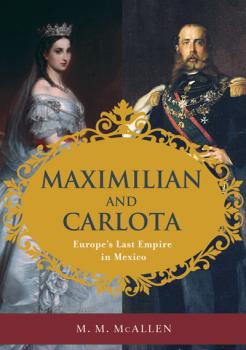
m-and-c-galley-coverAs Trinity University Press prepares to release Maximilian and Carlota: Europe’s Last Empire in Mexico by Mary Margaret McAllen, the Witte Museum is opening a companion exhibit, “Maximilian and Carlota: Last Empire in Mexico,” focusing on the fascinating lives of the ill-fated royal couple. The exhibit of portraits, photographs and artifacts opens on February 1, while the author will read from her book and be available to sign copies during a reception from 4 to 6 p.m. on Saturday, February 8, at The Twig Book Shop.

Fell in love a few year’s ago with C.M. Mayo’s masterful novel, The Last Prince of the Mexico Empire, focusing on a child caught up in the political turmoil – Principe Agustin de Iturbide y Green. A Library Journal review in 2009 perhaps summarizes the complexities involved most succinctly:

Once upon a time, there was a little half-American boy who briefly became heir to the Mexican throne—until his distraught parents sued the doomed Emperor Maximilian for his return.

I highly recommend Mayo’s book, and am looking forward to reading McAllen’s. And if these and the exhibit leave you thirsting for even more glimpses into the lives of Maximilian and Carlota, Mayo maintains an ongoing blog Maximilian ~ Carlota, described as “resources for researchers of the tumultuous period of Mexican history known as the Second Empire, or ‘French Intervention.'”

I’m hoping one of the two authors will suddenly contact me with a sliver of information (a very unlikely record to stumble upon, so am certainly not holding my breath) about a San Antonio connection to the royal rulers. Among the Austro-Hungarians enlisted to serve in support of their reign in Mexico was Baron George Ritter von Tomasini (1818-1912). As the Second Empire of Mexico collapsed, Tomasini and his wife made their way to New Orleans and to San Antonio by 1872. Here, they joined the community of dairy farmers at the Coker Settlement, about which I am writing a book for the Coker Cemetery Association. Geographically, the heart of the Tomasini farm was located where the cluster of shops and restaurants known as The Alley on Bitters are found today.

Eva and George Tomasini, photo from www.thealleyonbitters.com
Eva and George Tomasini, photo from http://www.thealleyonbitters.com

February 3, 2014, Update: Read Steve Bennett’s review of McAllen’s book in the San Antonio Express-News

March 19, 2014, Update: David Martin Davies will moderate a discussion with McAllen from 10 to 10:45 a.m. in the Story Room on the 3rd floor of the Central Library during the San Antonio Book Festival on Saturday, April 5.

January 5, 2016, Update: C.M. Mayo has posted a podcast of a conversation with McAllen recorded in The Twig in October 2015.
‘1,2,3. What do you see?’ Too many toucans to count.

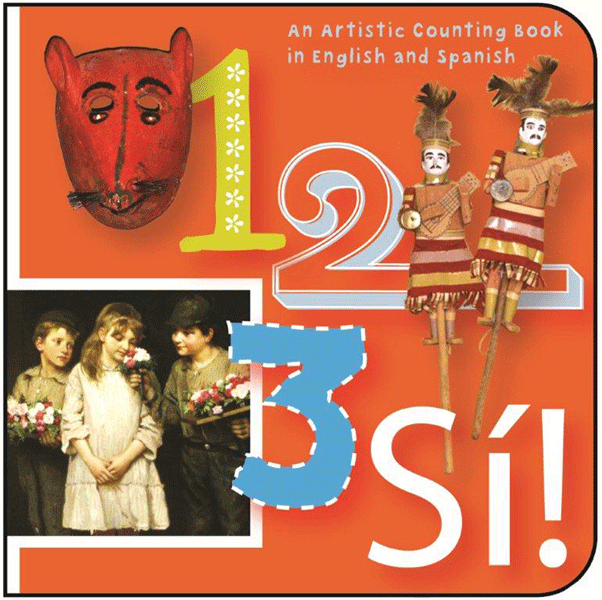
And the hardest part of counting must have been choosing what colorful images to include in 1, 2, 3, Sí! A Numbers Book in English and Spanish. The partners creating this new bilingual board book had to narrow down what to count from the immense holdings of the San Antonio Museum of Art.

Can’t imagine how they managed. And never have Pre-Columbian earthenware babies looked so appealing and downright ticklish, or a combination of images of eight animals from artisans of different centuries from five different countries seemed so logical.

With the assistance of many donors, the San Antonio Public Library Foundation provides the more than 25,000 babies born in Bexar County each year with their first books. Shortly after the newborns arrive, the books are delivered in the hospital to their parents in a Born To Read tote bag that also contains a Library card application and a map of branch locations throughout San Antonio.

Fluffy rabbit from "Pat the Bunny"

A baby’s first books are so important in starting a child off in the direction of a life-long love of learning. If a book is fun and appealing, a baby will want it read again and again. And again and again.

Our daughter wore out her first copy of Dorothy Kunhardt’s Pat the Bunny, but could not bear to be parted from it. We were forced to buy a second copy and perform countless more readings. Alas though, soon “Fuzzy Wuzzy had no hair.” We finally had to alter the words for the second over-petted rabbit to “Love the poor bald bunny,” foreshadowing her impending graduation to The Velveteen Rabbit.

The Library Foundation changes the books in the Born To Read bags every other year so families with more than one child receive different books. The idea to create a book based on the San Antonio Museum of Art’s collection was inspired by My First ABC.  Each letter in this bright board book is illustrated by a work of art drawn from the collection of the Metropolitan Museum of Art, from Paul Cezanne’s “Apples” to an X-shaped painting by Frank Stella.

The expertise of Trinity University Press was tapped to publish 1, 2, 3, Sí! The bright and colorful look of the book was designed by Madeleine Budnick, with photography by Peggy Tenison.

While promoting counting, bilingual literacy and art, 1, 2, 3, Sí! contains smaller-font hints for parents, grandparents, sibling and sitters to use the images for additional interaction. For example, the pages containing ten masks prompts “Which mask would you like to try on?,” with options including a rabbit mask from Mexico, a dog mask from Ecuador and a spirit figure from Papua New Guinea. A mesmerizing pair of eyes from an Egyptian coffin provides an opportunity for playing peek-a-boo.

Other suggestions for stimulating babies’ growing minds will be found in a companion activity booklet being designed by César Proa of Proa Design. Trinity University Press is creating a website – www.123-si.com – with ten related coloring and activity pages for teachers or parents to download and print.

Mayor Julián Castro officially will unveil all of these during a Family Launch on Saturday, September 10, at the Museum of Art. Families need only show their library cards to gain free admission to the museum during the event.

While the publication of 1, 2, 3, Sí! is exciting, there is more to come. The partners promise board books focusing on colors, shapes and animals will soon follow.

For those of us with no babies being born in San Antonio hospitals, 1, 2, 3, Sí! will retail for $7.95. 

Born to Read from SAPLF on Vimeo.

Barbara Ras’ ‘Elephant’ in ‘New Yorker’

Barbara Ras, director of Trinity University Press, has one of her poems featured in the March 15 issue of The New Yorker:

Washing the Elephant

by Barbara Ras, March 15, 2010

Isn’t it always the heart that wants to wash
the elephant, begging the body to do it
with soap and water, a ladder, hands,
in tree shade big enough for the vast savannas
of your sadness, the strangler fig of your guilt,
the cratered full moon’s light fuelling
the windy spooling memory of elephant?

What if Father Quinn had said, “Of course you’ll recognize
your parents in Heaven,” instead of
“Being one with God will make your mother and father
pointless.” That was back when I was young enough
to love them absolutely though still fear for their place
in Heaven, imagining their souls like sponges full
of something resembling street water after rain.

Still my mother sent me every Saturday to confess,
to wring the sins out of my small baffled soul, and I made up lies
about lying, disobeying, chewing gum in church, to offer them
as carefully as I handed over the knotted handkerchief of coins
to the grocer when my mother sent me for a loaf of Wonder,
Land of Lakes, and two Camels.

If guilt is the damage of childhood, then eros is the fall of adolescence.
Or the fall begins there, and never ends, desire after desire parading
through a lifetime like the Ringling Brothers elephants
made to walk through the Queens-Midtown Tunnel
and down Thirty-fourth Street to the Garden.
So much of our desire like their bulky, shadowy walking
after midnight, exiled from the wild and destined
for a circus with its tawdry gaudiness, its unspoken pathos.

It takes more than half a century to figure out who they were,
the few real loves-of-your-life, and how much of the rest—
the mad breaking-heart stickiness—falls away, slowly,
unnoticed, the way you lose your taste for things
like popsicles unthinkingly.
And though dailiness may have no place
for the ones who have etched themselves in the laugh lines
and frown lines on the face that’s harder and harder
to claim as your own, often one love-of-your-life
will appear in a dream, arriving
with the weight and certitude of an elephant,
and it’s always the heart that wants to go out and wash
the huge mysteriousness of what they meant, those memories
that have only memories to feed them, and only you to keep them clean.

Barbara, who will publish a collection of poems, The Last Skin, later this month, also had a poem appear in The New Yorker in 2006.  She will be one of the more than 20 writers in the spotlight for Wordworkers, an exhibit opening at Bihl Haus Arts from 5:30 to 8:30 p.m. on Friday, March 19.   During the opening, poets photographed by Melanie Rush Davis “will scrawl their poetry on gallery walls.” 

Other featured writers include Carmen Tafolla, Marian Haddad, Naomi Shihab Nye, Sandra Cisneros, Nan Cuba, Rosemary Catacalos, Jenny Browne, John Phillip Santos and Bryce Milligan.  As the exhibition at Bihl Haus continues, there will be a reading and small press book fair from 1 to 4 p.m. on Saturday, March 27, and a poetry reading by Jim LaVilla-Havelin from 7 to 9 p.m. on Thursday, April 8.  Bihl Haus Arts is located at 2803 Fredericksburg Road.

Barbara’s “Washing the Elephant” brought forth memories of the weekly visits to the confessional that forced me, as well, to make up imaginary sins to tell the rigid Father Habit at Star of the Sea.

Note Added on May 9Review of “Washing the Elephant” and Ras’ The Last Skin

Update on November 5:  Barbara Ras will discuss The Last Skin at The Twig Book Shop at Pearl Brewery from 3 to 5 p.m. on Sunday, November 14.

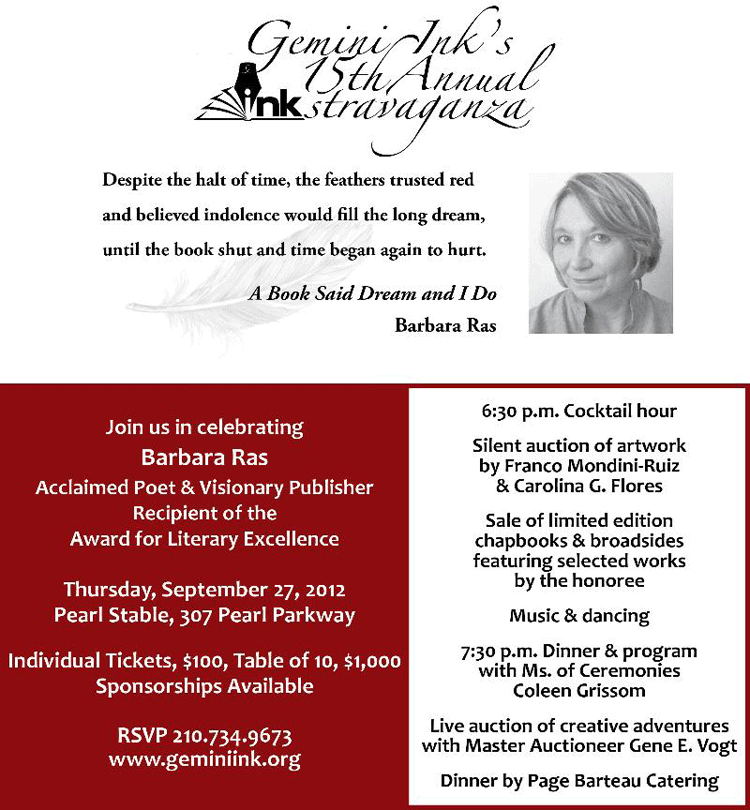
Update on September 11, 2012: Gemini Ink is honoring Barbara Ras at its 15th Annual Inkstravaganza at Pearl on Thursday, September 27, and one should never miss an opportunity to hear the utterances emitted by Coleen Grissom.