Postcard from Lisboa, Portugal: Feira Livro

This is the 84th edition of the Lisboa Book Fair, so it has had ample time to grow and mature. We watched as the rows of containers were lined up along both sides of sloping King Edward VII Park. They looked sterile, but what a change when we went back and the containers had been customized. Every single one looked different, depending on the bookstore or publisher occupying it.

Not sure how jam-packed the Book Fair is on weekends, but we strolled through on a Monday. There are 250 book vendors represented at the event running more than two weeks. Tented areas along the way provide space for small readings and autograph sessions.

Thirty food and beverage booths are interspersed among the book vendors, again all different. In between rows of booths are seating areas, each distinctively designed – some tables and chairs for adults; some pint-size reading or play “rooms” for children; and some laid out like comfortable lounges with living room furniture resembling a Copenhagen showroom.

How pleasant it looked to pause to peruse purchases over an espresso or glass of wine. Of course, we didn’t buy anything; naturally, most books are in Portuguese.

This slideshow requires JavaScript.

San Antonio, headed to its third edition of its Book Festival, has plenty of time and room to grow. The San Antonio Public Library Foundation already squeezes an incredible amount into one day, and, frankly, it’s so accessible because of the manageable size and close proximity of the venues.

One day, we’ll look back at these early San Antonio Book Festivals nostalgically, the same way old-timers reflect on the neighborhood intimacy of the first years of the King William Fair. Even now, the agenda is so crowded, decisions about which author sessions to attend are wrenching.

But, best of all, most of the featured books and readings at the San Antonio Book Festival are in a language I understand. Looking forward to the 2015 edition.
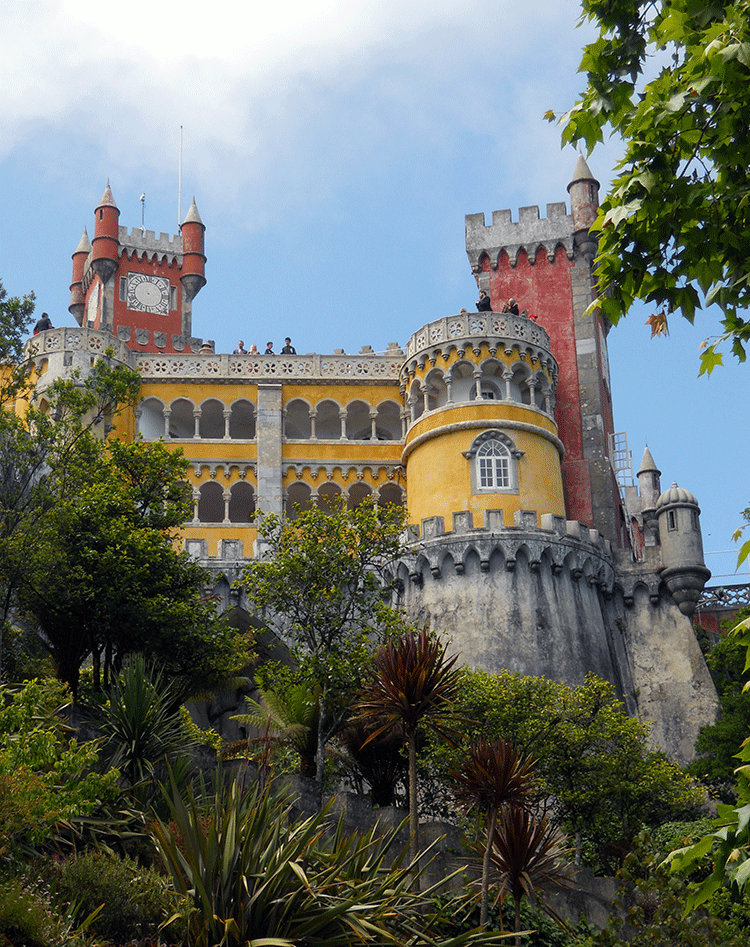
Postcard from Sintra, Portugal: The Opulence of the Pena Palace

Climbing up higher than the old Moorish Castle, one reaches a site where humble monks seeking an isolated retreat free from distractions established a monastery. Following the return of Vasco da Gama, King Manuel I (1469-1521) constructed a stone palace astride the hilltop as part of his celebration of Portugal’s vast new riches.

From 1840 to 1885, however, King Ferdinand II (1816-1885) transformed the Pena Palace into an overwhelming, over-embellished symbol of the aristocratic follies of European royalty (This was not the sole palace.) – a stunningly magical mélange of ornate Gothic, Renaissance, Moorish and Manueline architectural details.

This slideshow requires JavaScript.

Crumbling colonial power increasingly led to economic distress in the country, and King Carlos (1863-1908) resorted to dissolving the Parliament and assigning dictatorial powers to his prime minister. Discontent mounted, and brazen assassins fired into the open royal carriage as the King and his family traversed one of Lisboa’s main plazas. King Carlos and his eldest son were killed.

His second-born son, Manuel (1889-1932), succeeded him, only to be forced to flee to England in 1910. Manuel II was Portugal’s last king.

Amazingly, the leaders of the new republic preserved the palace and its lavish furnishings virtually intact.

Postcard from Lisboa, Portugal: Rising from Rubble

While there are ancient castles, churches and convents, some dating from as early as the 11th century, much of Lisboa is “new,” built after 1755.

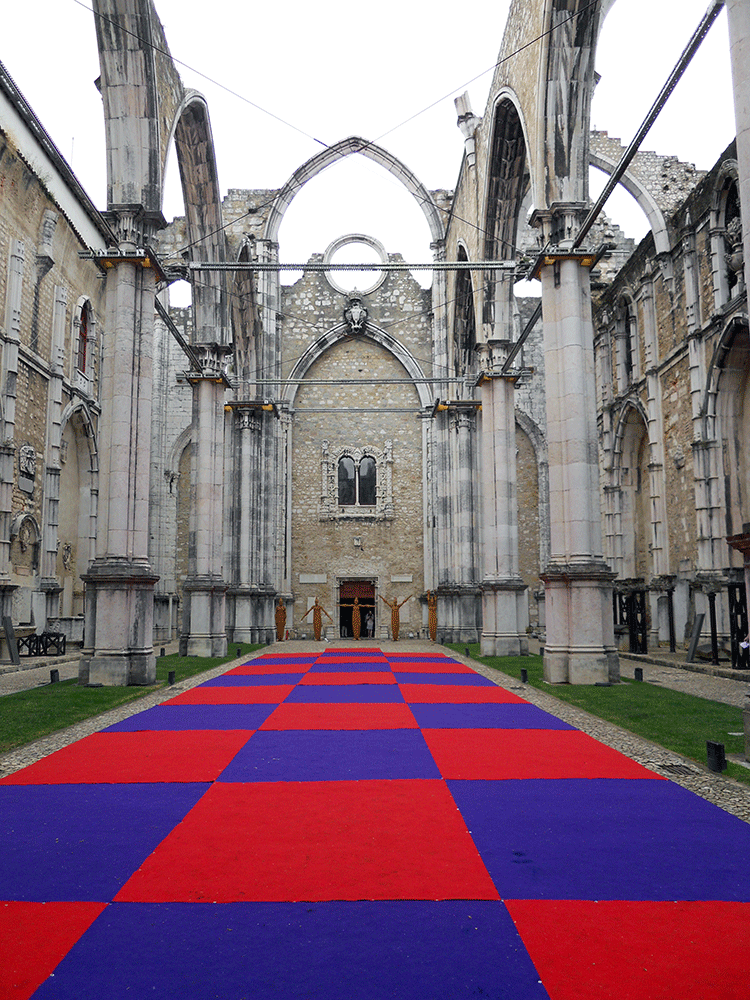
On the morning of All Saints’ Day in 1755, Lisboa was struck by a major earthquake, one estimated to have been of an 8.7 magnitude. With towering church walls crumbling around them, many fled Mass for the safety of the riverfront, only to be swallowed by tsunami surges sweeping away broad swathes of the quay. Raging flames then began to leap from rooftop to rooftop throughout the city.

By the time the cascading disasters subsided, more than a quarter of Lisboa’s 250,000 inhabitants had perished. Most of the exquisite buildings dating from Portugal’s golden age lay in ruin.

The lower, center part of the city was razed. Sprawling networks of rabbit-warren streets were replaced by huge public squares connected by broad avenues. Elegant new buildings with earthquake-resistant walls began to line the boulevards.

This slideshow requires JavaScript.

Today’s Lisboa is vibrant and beautiful.