Postcard from Oaxaca: Memorable faces from ancient times

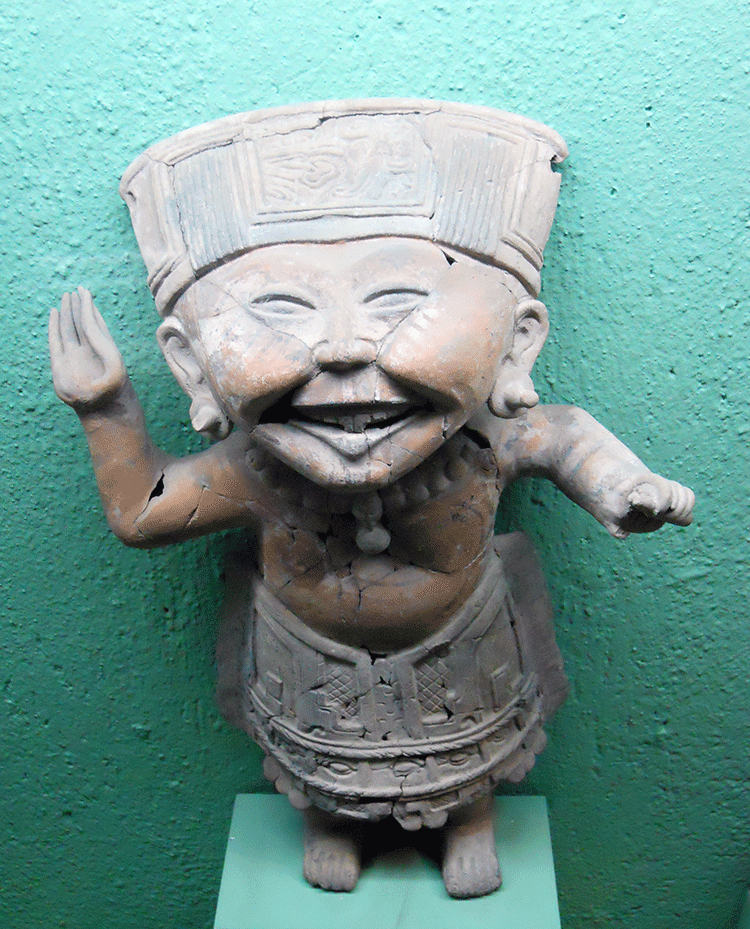
In the 1970s, artist Rufino Tamayo (1899-1991) spent his own funds to lovingly restore an 18th-century building in his native city of Oaxaca to house his collection of pre-Hispanic art as a gift to his hometown.

The displays of the artifacts in the Rufino Tamayo Museum of Pre-Hispanic Art are unusual because they are grouped aesthetically and set against colors of the artist’s own choosing.

The remarkable faces crafted by native artists of Mexico stare back, some frightening looking but many laughing as at some unknown joke, possibly the photographer.

This slideshow requires JavaScript.

Postcard from Oaxaca: Wedding at Santo Domingo

Easy to stumble into parades along the streets of Oaxaca, sometimes religious, sometimes protest marches you need to avoid and sometimes simply an exuberant wedding celebration….

This slideshow requires JavaScript.

Postcard from Oaxaca: ‘Hecho’ street art invades museum’s colonial walls

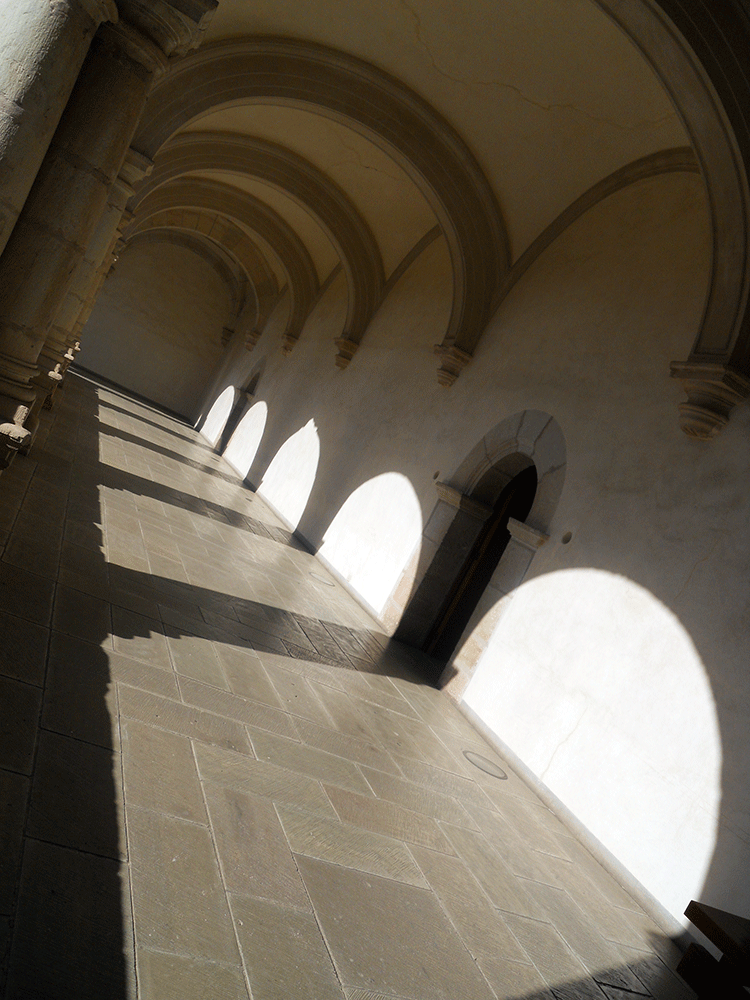
The contrast of edgy modern art housed within colonial-era walls is always striking, but even more so at Hecho en Oaxaca, an exhibit bringing urban art into the Museum of Contemporary Art, or MACO, in Oaxaca.

This slideshow requires JavaScript.

As a linguistically challenged blogger, translating websites from Spanish to English to conduct my own research would not be a reliable option. Instead I’ll rely on Carole Turkenick’s words from her Oaxaca Tips (a great, inexpensive resource to pick up at Amate Books the second you arrive in Oaxaca) relay the late-17th or early-18th-century building’s history:

The mansion initially belonged to the noble estates of the Pinelo and Lazo de la Vega families whose coats of arms are engraved in the stone façade on either side of St. Michael Archangel. Following Independence, the structure passed through a series of private owners including in the early 1900s a professor at the local Institute of Sciences and Arts who had the distinction of owning the first automobile in Oaxaca. By the 1970s, the building had seriously deteriorated and was taken over by the state to be converted into a museum of colonial history. The effort failed and the mansion passed to a local civil organization led by Francisco Toledo who together with the National Institute of Fine Arts opened the MACO in 1992. The building was restored again in 2009-2010,