
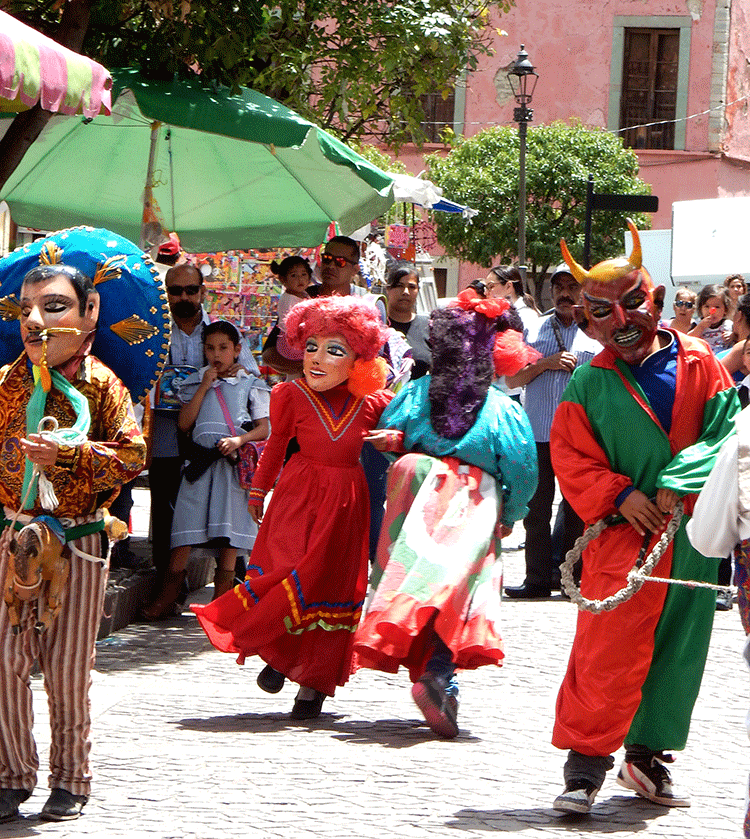
Dancers pranced to beats of drums and high-pitched flutes all day yesterday in a street below the house where we are staying. We’re not sure it is an official holy day, but the neighborhood participants treat it as such.
Flowers adorned the altar in the Capilla Santa Casa de Loreto, dedicated to the Annunciation in the home the Virgin inhabited when the angel Gabriel revealed her impending delivery of El Nino. While Candelaria in January is regarded as the holy day when the faithful bring their small Nino statues dressed in new finery to churches for blessing, in Guanajuato the ceremony is replicated in front of the altar during this festive event marking the anniversary of the consecration of the chapel in 1854. Although some let me peek inside their baskets, we didn’t feel comfortable asking anyone for permission to photograph the lacily attired Ninos they cradled so proudly.
And, of course, music, food and firecrackers warmed up the crowd in advance of the major pyrotechnical displays at 9 o’clock. The experts toiled to assemble a monumental castillo of fireworks throughout the afternoon.


We were viewing the altar when the shrill sounds of the whirling wheels of light first began. Along with many of those heeding the call to exit the church, we watched from the steps. The Mister began filming with the camera.
First lesson learned: Do not hold the camera vertically when shooting because we do not have the software downloaded to rotate it 90 degrees. For this reason, the images of the fireworks were snatched from frames of the video and turned for viewing.
Second lesson: When a lone bombero appears beside you in fireproof clothing, lowers his visor and nervously glances upward, MOVE. Even if relocating means you must stop filming just as the swirling halo of the announcing angel perched atop the castillo rockets upward into the dark night sky.
Cascades of sparkling fireworks showered down upon us from the rooftop of Capilla Santa de Loreto. This display was followed by the finale of explosions of light set off above. The video captures some of the first sparkling showers.


 Postcards from Barton Springs