Now, observe, my daughter, the contrast between the luxurious dress of many women, and the raiment and adornments of Jesus…. Tell me: what relation do their fine shoes bear to the spikes in Jesus’ Feet? The rings on their hands to the nails which perforated His? The fashionable coiffure to the Crown of Thorns? The painted face to That covered with bruises? Shoulders exposed by the low-cut gown to His, all striped with Blood? …At the hour of such a women’s death, I think Jesus will be heard saying: “Cujus est imago haec… of whom is she the image?” And the reply will be: “Demonii... of the Devil!” Then He will say: “Let her who has followed the Devil’s fashions be handed over to him; and to God, those who have imitated the modesty of Jesus and Mary.”
Saint Anthony Mary Claret, 1800s
Saint Anthony Mary Claret boldly put words into the mouth of Jesus by issuing this condemnation of flashy fashionistas in the 1800s. As their patron saint, weavers and textile merchants must have been grateful for his proclamations promoting the excessive usage of yards upon yards of fabric.
Marylike standards spelled out by the Vatican under Pope Pius XI, who reigned from 1922 to 1932, demanded “modesty without compromise.” Sleeves to the wrist, and dresses concealing, not revealing, “the figure of the wearer” covering women from not more than two-fingers-width under the neck to the ankles. And for decorations? Fancy “fabrics such as laces, nets, organdy may be moderately used as trimmings only.”
But what about fashion trends for saints? Who decides what is appropriate for statues of saints to wear? I couldn’t find any rules online establishing guidelines for saintly attire.
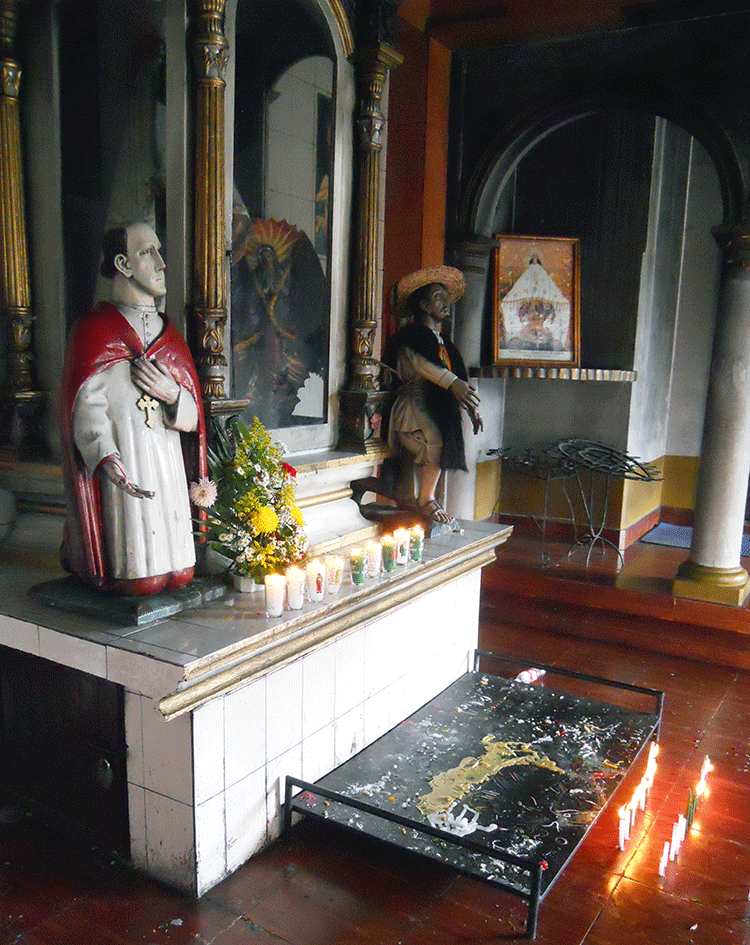
All I know is the faithful in San Cristobal de las Casas have upended dull traditions for dressing saints. Colorful garb, preferably with sparkles, is definitely in. And toddler Jesus looks adorable standing at his mother’s feet in that shimmering pink gown trimmed in fur.
Unfortunately, signs in many churches, as in upscale fashion houses, forbid you from taking photos of their saints’ updated wardrobes.
This slideshow requires JavaScript.
Now, I’m not accusing anyone of dressing Mary or any other saints in sexually suggestive clothing.
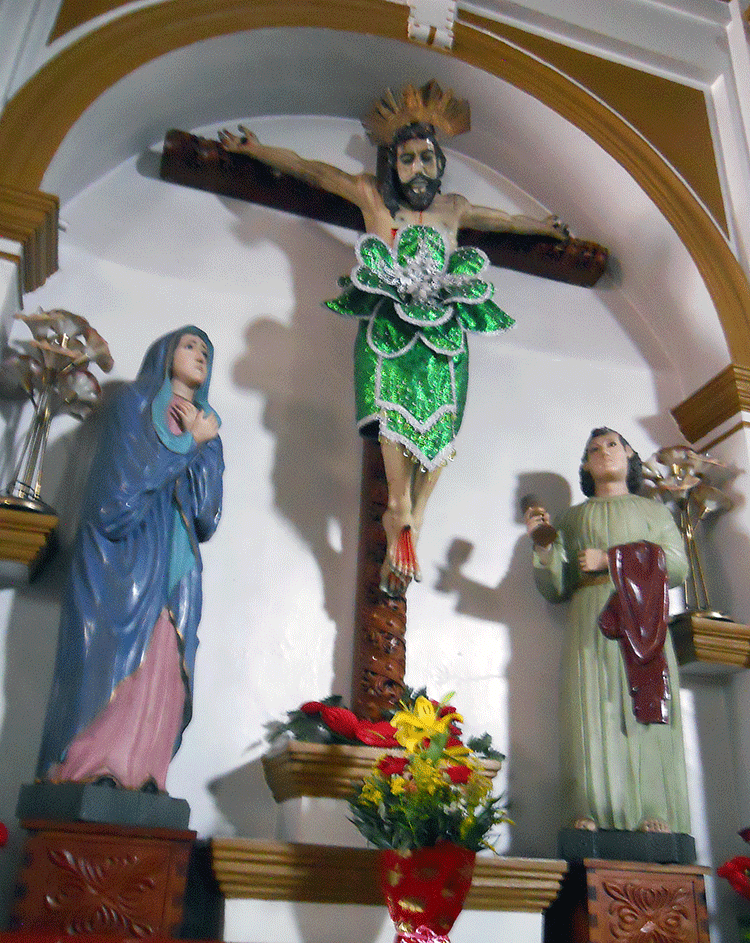
Well, except maybe Jesus. The thought must be that Jesus’ loincloth was looking rather tired and dingy. Surely a shiny green number with a huge, modesty flower in front would lighten his burden? Or a cluster of flowers on that orange number with the contrasting silver fringe?
And, while the clothiers were at it, the Holy Ghost symbol needed some glitter. And the dark somber mood in a church would certainly benefit from more upbeat lighting. Neon to frame the altar honoring Our Lady of Guadalupe.
Italy might think it is an international fashion capital, but the Vatican is light years behind the trends designers in San Cristobal de las Casas are setting.




 Postcards from Barton Springs