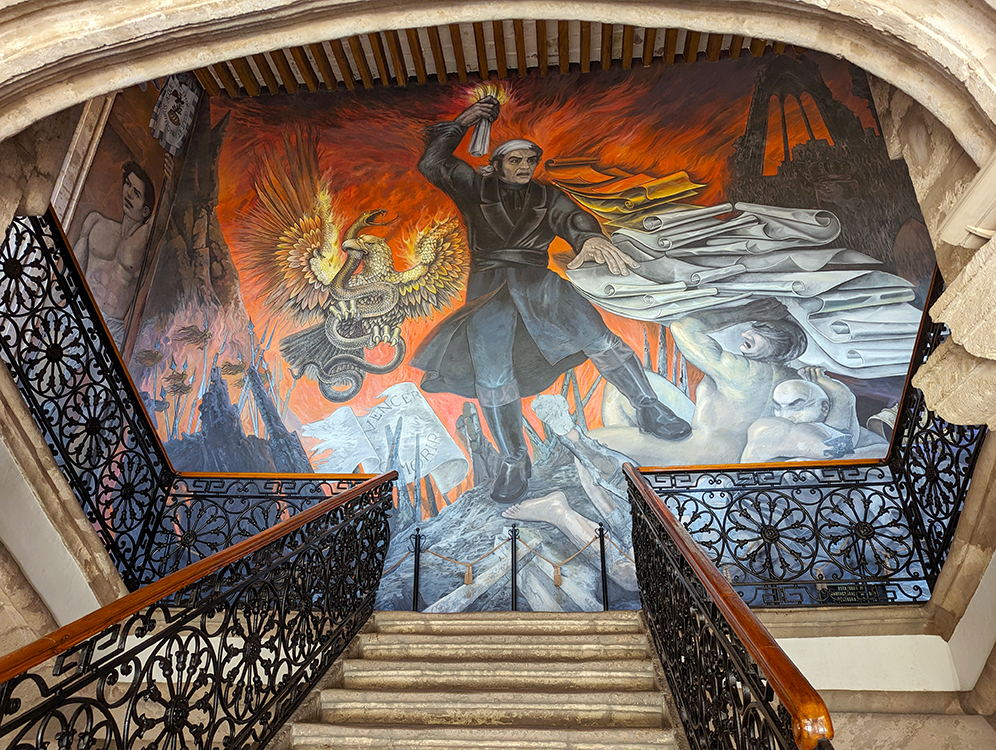
Postcard from Morelia, Mexico: Morelos’ call for justice echoes in this hall

Above: Portion of “Morelos y Justicia” mural, Agustin Cardenas Castro, El Antiguo Palacio de Justicia

Inflamed by the fervor of revolt, Jose Maria Morelos dominates the stairwell of the former governmental headquarters for the Spanish city originally known as Vallodolid on the central plaza of his namesake city. In 1812, the building was repurposed to serve as a mint producing copper coins and postage stamps.

A Belgium engineer hired in 1884 to convert the structure into Michoacan’s supreme court added French architectural detailing to the façade and interior. Particularly distinctive are the pinjante arches, floating double arches with no central support columns.

Continue reading “Postcard from Morelia, Mexico: Morelos’ call for justice echoes in this hall”
Postcard from London, England: Fashion foot forward

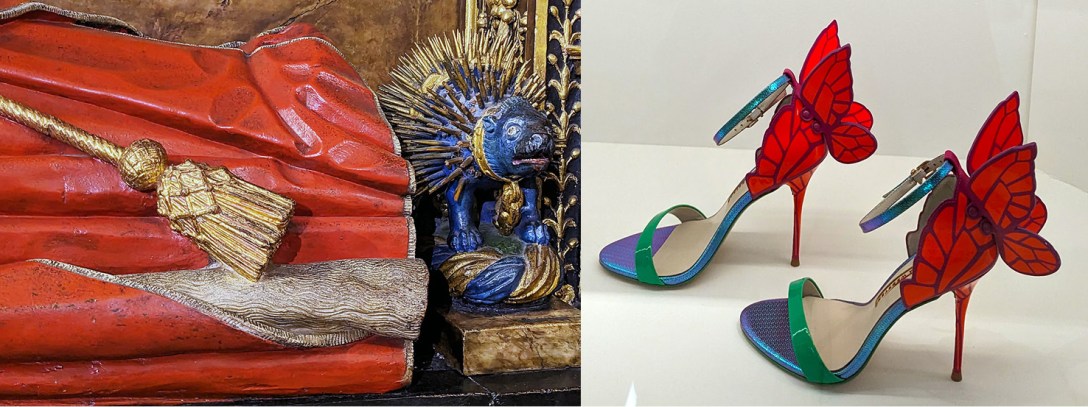
Above left: Hedgehog at the feet of an entombed noble, Westminster Abbey. Above right: Butterfly-wing sandals, Sophia Webster, “Rebel: Thirty Years of London Fashion,” The Design Museum

One might assume I have a foot fetish, as once again I focus on what’s found underfoot of effigies atop monumental tombs of the rich and powerful who occupy prime real estate in churches in Europe. Prior to this, most guardians of the feet we encountered were dogs – beloved lapdogs or prized hunting hounds to offer comfort and protection for the dead.

But the fashion for many of those buried in Westminster Abbey is sculpted to emphasize distinction and convey rank and power. Kings and queens incline toward lions. The regal Scottish red lion posted by Mary Queen of Scots appears assigned to make sure no one attempts to peep up her numerous layers of petticoats.

Continue reading “Postcard from London, England: Fashion foot forward”

Postcard from Morelia, Mexico: Foreign beliefs transform both faith and art

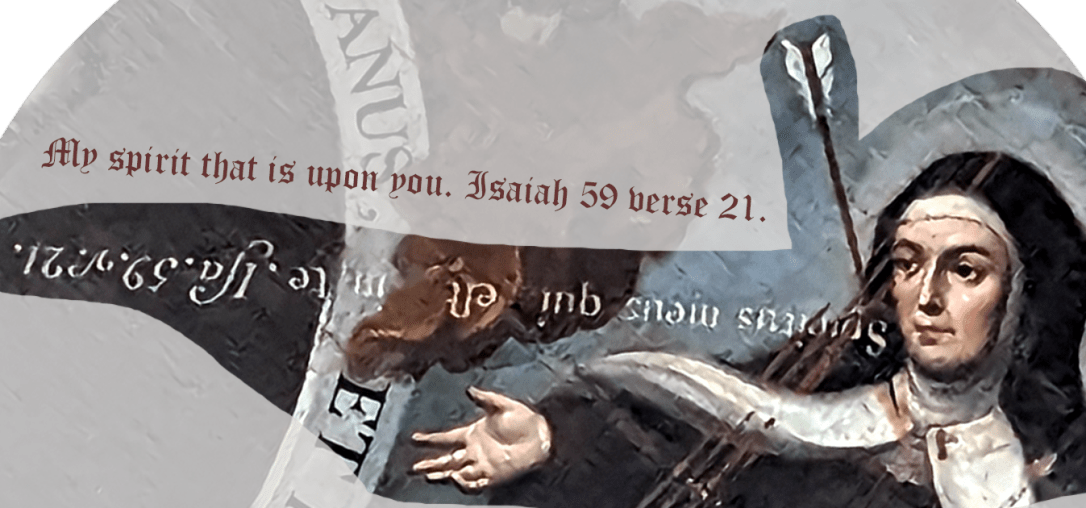
My spirit that is upon you,” Isaiah 59 verse 21, translation of one of the Latin phrases floating around the canvas of “El Obispo Juan de Palafox y Mendoza” by Miguel Cabrera

As in Europe, art served as a primary tool for friars to introduce the mysteries of Catholicism to those of other beliefs. Consequently, religious paintings from that period form the core of the collection of Museo de Arte Colonial. The works are displayed in a house of the Colonial period which was renovated in 1984.

Continue reading “Postcard from Morelia, Mexico: Foreign beliefs transform both faith and art”