
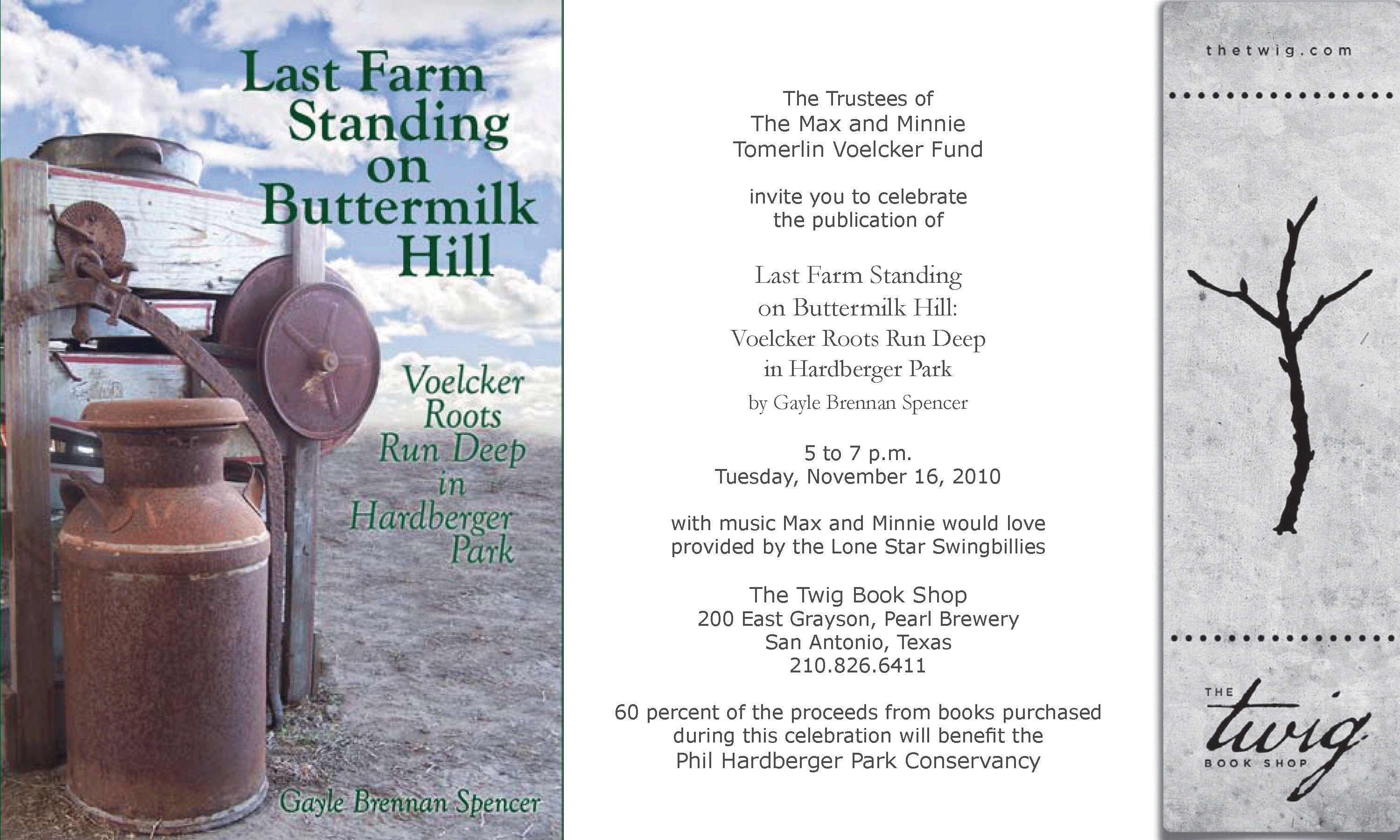
 So many attempts to find people who directly knew Max and Minnie Tomerlin Voelcker literally led to a deadend – the cemetery. Now that Last Farm Standing on Buttermilk Hill: Voelcker Roots Run Deep in Hardberger Park is in print, people are emerging with wonderful stories and memories – some from unexpected places. My hope is that people who read the book will return to this post and share the memories the book unleashes, add to the narrative and (oh my!) make corrections. I’ll share a few details gleaned from bits and pieces of conversations to start this process.
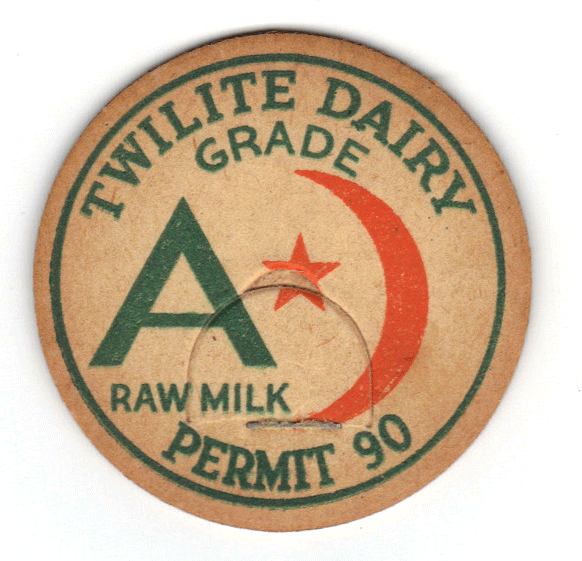
A neighbor of mine surfaced with a sleeve of Twilite Dairy bottle caps. Located out Blanco Road about a mile past Voelcker Lane, this dairy was operated by Josephine and Onis Lester Harrison (1910-1954), the son of Nancy Cordelia Tomerlin (1889-1962), Minnie Voelcker’s half-sister, and James Jot Harrison (1886-1956).
During the celebration for the book at The Twig yesterday, James Jot Harrison’s nephew, Jim Harrison, the son of Allie Gay Stanley (1902-2001)and Willie Willis Harrison (1898-1982), shared a family tree for the Harrisons (which would have been quite a time-saver).
While conducting research, I visited by telephone with Elizabeth Katherine Monosmith (1918-2010), the daughter of Katherine Josephine Speier (1891-1968) and Henry Dudley Voelcker (1889-1919), Max Voelcker’s brother. She was extremely tight-lipped with me, claiming she knew almost no family history. A son-in-law arrived at The Twig, however, saying his mother-in-law had great tales about the Voelcker boys’ escapades and was lucid up until the day she died. He pledged to share some here after reading the book.
The spouse of the man who built the old rock Coker church building appeared at the reception. Max and Minnie contributed $10 in the midst of the Depression toward the construction of the church. And Butch Gerfers, the third great-grandson of Joseph Coker (1800-1881), was letting everyone know about the dedication of a Texas State Historical Marker at Coker Cemetery on Saturday, November 27, at 10 a.m. That event should elicit many stories from descendants of the dairy farming families who considered themselves part of the Coker Settlement.
COKER CEMETERY
SOUTH CAROLINA NATIVE JOHN “JACK” COKER CAME TO TEXAS IN 1834 AND FOUGHT IN THE BATTLE OF SAN JACINTO. IN GRATITUDE FOR HIS SERVICE, COKER RECEIVED FROM THE REPUBLIC OF TEXAS A ONE-THIRD LEAGUE, WHICH TOTALLED 1,920 ACRES AND WAS SITUATED ALONG THE BANKS OF THE SALADO CREEK, APPROXIMATELY TEN MILES NORTH OF DOWNTOWN SAN ANTONIO. JOHN COKER SOON WROTE TO HIS BROTHERS JOSEPH AND JAMES TO COME TO TEXAS AND HELP HIM TO SETTLE HIS LAND. WHILE BOTH BROTHERS MADE THE TRIP TO TEXAS WITH THEIR EXTENDED FAMILIES, JAMES DECIDED TO SETTLE WITH HIS FAMILY IN CHEROKEE COUNTY, TEXAS; JOSEPH AND HIS FAMILY JOURNEYED ON TO THE LAND ON SALADO CREEK.
THE COKER FAMILY SETTLEMENT SLOWLY GREW, BUT TRAGEDY STRUCK IN 1857 WHEN LOUCIOUS MONROE COKER, SIX-YEAR-OLD SON OF JAMES HARRISON AND SARAH (GANN) COKER, DIED FROM A RATTLESNAKE BITE. LOUCIOUS WAS BURIED ON A HIGH KNOLL NEAR SALADO CREEK, AND A LARGE LIMESTONE HEADSTONE WAS PLACED AT THE SITE—THE STONE REMAINS AS THE MOST PROMINENT MEMORIAL IN THE CEMETERY. JOHN “JACK” COKER DIED IN 1861 AND WAS ALSO BURIED AT THE SITE.
IN 1873, JOSEPH COKER CONVEYED A 201-ACRE TRACT TO HIS TWO SONS, AND SIMULTANEOUSLY CONVEYED A THREE-ACRE PORTION TO TRUSTEES FOR USE AS “A NEIGHBORHOOD CHURCH, SCHOOL-HOUSE AND GRAVE-YARD.” A SCHOOLHOUSE WAS SOON BUILT AND A METHODIST CONGREGATION WAS ESTABLISHED IN 1885. ALTHOUGH THE SCHOOL HAS RELOCATED, THE CHURCH REMAINS ADJACENT TO THE CEMETERY. THE COKER CEMETERY ASSOCIATION INCORPORATED IN 1967 IN ORDER TO CARE FOR THE SITE, AND TODAY, COKER CEMETERY SERVES AS A REMINDER OF AN EARLY TEXAS PIONEERING FAMILY.
HISTORIC TEXAS CEMETERY – 2009
The title of the book even inspired a board member of Hardberger Park Conservancy, Doug McMurry, to pick up his guitar and write a song. I talked him into sharing an excerpt:
Last Farm in Town (Phil Hardberger Park)
by Doug McMurry
Here’s to Minnie and Max.
I think you’ll agree
What they left behind
Is incredible to find.
It’s the last farm in town.
Walking through the park,
It’s a different place now.
I think you will see
This was meant to be.
It’s the last farm in town.
History is not stagnant; it’s open to interpretation. I hope others will continue to build upon this story by taking advantage of the interactive dialogue capabilities afforded by blogs and sharing their collective memories about Max and Minnie and life on Buttermilk Hill.
Update on November 23: The Max and Minnie Tomerlin Voelcker Fund has donated copies of Last Farm Standing on Buttermilk Hill to the Coker Cemetery Association to use for fundraising purposes during the marker ceremonies on Saturday.
Update on November 29:
Update on March 6, 2011:
Royce Jones recalled: “I was 6 years old when I asked my father how to milk. And he showed me. To my chagrin, he then assigned a cow or two to me to milk every day before I went to school.”
The above story is among many V. Royce Jones (1917-2011), the second great-grandson of Joseph Coker (1800-1881), so generously shared with me two years ago to help me understand what life was like for those families growing up on dairy farms on “Buttermilk Hill.” I read in the Express-News this morning that the 93 year-old will be joining his ancestors and former neighbors resting in the Coker Cemetery on March 9. I’m so thankful for the conversations I was privileged to have with him.
Update on March 12, 2011:
Willie Mae Tomerlin remembered Minnie’s mother, “Grandma Tomerlin, cooked on a wood stove ‘til the day she died (1951). She made the best biscuits on that wood stove.”
Willie Mae Tomerlin, who also granted me an interview, joined Royce Jones at the Coker Cemetery the following day. The 90-year-old was the widow of Minnie’s nephew Aubrey Tomerlin.
Update on April 22, 2011: A few weeks ago, Butch Gerfers, president of the Coker Cemetery Association, invited me to sign books during the association’s annual meeting. Members of families mentioned in Last Farm Standing – Tomasinis, Cokers, Isoms, Autrys and more – introduced themselves to me and shared stories I was unable to write down while signing books. Mitchell G. Tomasini, Jr., Max Voelcker’s first cousin once removed, said he was quite surprised by the photograph of himself in the book. While he did not remember the photo from the San Antonio Light, he remembered the day quite clearly.
The 1938 image shows him standing next to a wrecked plane in his grandparents’ cornfield. Mitchell said the pilot had been storing the plane on the farm and had taken it up twice that day. While the pilot was teaching a student to fly, Mitchell waited with great excitement down below. The pilot had promised take the 11-year old up next for what would have been the first airplane ride in his life.
But Mitchell’s first flight was postponed. The plane crashed into the rows of tall corn, killing both student and pilot.

Update on April 23, 2011:
Jim Harrison, whose family lived near Blanco and West Avenue, grew up calling Max and Minnie by the same names his first cousin and Minnie’s half-nephew, Onis Harrison, did – Uncle Max and Sister. Jim and his mother “would take my buggy and donkey and ride down Blanco Road to see Uncle Max and Sister. My donkey was named Seabiscuit.” Naming a donkey for the legendary racehorse of 1938 fame seems wishful thinking; it probably did little to inspire him to move at a rapid pace.
from Last Farm Standing on Buttermilk Hill
Can’t believe I had forgotten to share Jim Harrison’s excitement over discovering a photo of his donkey Seabiscuit, unidentified as such, in the book.
Note added on July 23, 2011: The Coker Cemetery Association has copies of the available for sale through its website.


 Postcards from Barton Springs