Postcard from Budapest, Hungary: Elevated artistry for heating a home

Tile stoves were favored for home heating in Hungary since medieval times, with the radiant heat stored by fired clay capable of keeping things surprisingly toasty.

Aristocrats commissioned fancier tilework than the common folk. Most of the tiles featured here are from the Budapest History Museum, also known as the Castle Museum, and originally were used in the royal palace itself.

The 15th-century stove with jousting knights was reconstructed from surviving pieces. The fish-helmeted knight above appears poised to be speared.

The blue tile stove housed in the Hungarian National Museum dates from the 17th century.

While not as aristocratic as the palace’s tile stoves, we once had a handsome, upright Godin stove we employed to warm up our home in the Monte Vista Historic District years ago. One small load of wood would last all day in the efficient parlor stove. The outer walls grew fiery hot, and we used it on cold days until about 29 years ago when our Niña suddenly darted straight toward it and placed both hands flat against it.

After the return from the emergency room, the Godin was retired from service.
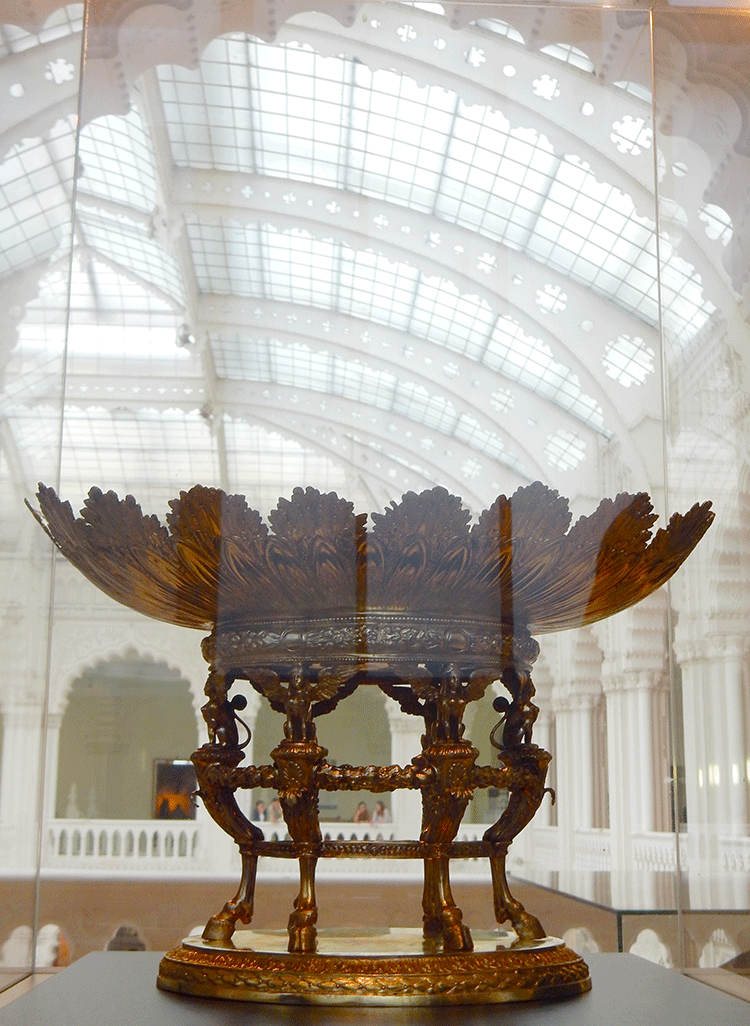
Postcard from Budapest, Hungary: A peak at treasures inside the Art Nouveau jewelbox

Transferring some antiques from the Hungarian National Museum, the Hungarian Parliament founded the Museum of Applied Arts in 1872 in recognition of the importance of decorative arts and design. Acquisitions increased with purchases at major world fairs, including those in Vienna in 1873 and Paris in 1878 and 1889, and gifts from Herend Porcelain Manufactory, Zolsnay, which has been producing luxury hand-painted and gilded porcelain for close to 200 years.

With the growth of the museum’s collection, a new building (see prior post) was required. The grand opening of the Art Nouveau palace in 1896 was attended by Emperor Franz Josef.

War and political changes contributed to the treasures held by the museum from the 1940s to 1960s as items were “rescued” from large houses and palaces by the Ministerial Commission for Endangered Private Collections. The Soviet takeover in 1948 led to the nationalization of numerous independent collections.

Parts of the museum were closed off when we were there this spring, as the building is being both restored and expanded following an international design competition. Renderings of the new wing can be viewed by clicking here.

Postcard from Budapest, Hungary: No need to even cross the threshold to be smitten with this museum

The first time we approached the Museum of Applied Arts in Budapest, we simply admired it from the outside, loitering under the tiled arches of the entrance. Green and gold ceramic tiles crown the rooftops of the distinctive Art Nouveau edifice built in the 1890s with its design freely combining Hungarian, Islamic and Hindu architectural influences.

The museum is so striking, this batch of photos focuses solely on the structure itself. Renovation of the façade was ongoing in May.

The central atrium is left free of exhibits to accommodate special events, a serious coffee competition with the audience patiently watching the judges taste the entries when we were there.

The next post will offer a glimpse of some of the art meriting such an ornate architectural package.