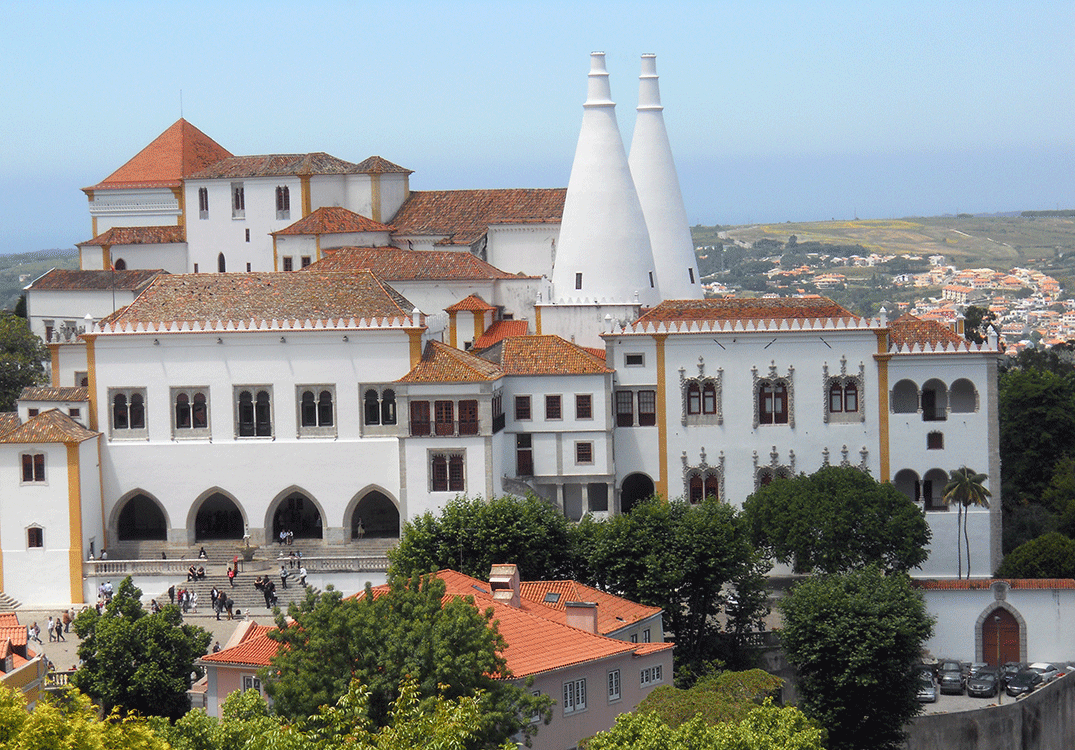
Postcard from Sintra, Portugal: Royal Retreat

Only 15 miles from Lisboa but several degrees cooler, Sintra was a popular summer retreat for the royal family for centuries. King Joao I (1385-1433) began layering changes upon the Moorish base, and successive kings continued altering the National Palace to suit current styles.

This slideshow requires JavaScript.

Major feasts must have been served, as the conical twin chimneys top enormous stoves and ovens in the palace kitchen. And, as always in Portugal, a multitude of tiles color the walls.

Postcard from Sintra, Portugal: Mounting the Moorish Castle

Stair-stepped trails cushioned with leaves and pine needles wind their way up from Sintra through the heavily forested Park of Pena – up and up, higher and higher – to the Moorish Castle.

Not one, but two walls, encircle and fortify the post established by invading Moors during the 10th century to provide views to protect their claim. And what views their towers provided, out across the surrounding hills and valleys clear to the sea, five or six miles away.

While the post was secure, Moorish forces in Lisboa nearby were not. Soldiers of the Second Crusade joined forces with those of King Alonso I of Portugal in the summer of 1147 and surrounded the city. After a four-month siege imprisoning them, the starving Moors finally surrendered, a surrender including the fortress.

This slideshow requires JavaScript.

Assuming duty on a blustery day must have been dangerous. Truly scared the winds snatching at my long, full skirt and sun-shading sombrero would send us soaring like a kite over the ramparts and crashing into the valley below. The fear led to failure to conquer the absolutely highest outlook.

But even this geographical dominance was subject to one-upmanship. A subsequent post.


Postcard from Porto: Following the compass into the Old World

The timeline of recorded history takes on such added depth in Europe, and nothing reminds you of your own new-worldliness faster than the ancient stone walls of a towering cathedral, perched high on a hilltop and guarded by a giant knight renowned for his service battling the Moors.

The first of the Romanesque walls of the Cathedral, or Se, of Porto, Portugal, were erected in 1110. Of course, centuries of alterations and additions transformed the original design by contributing Gothic and Baroque details, many with layers of gilding gleaned from expeditions to the New World.

Following King John I’s 1387 marriage to Princess Philippa of Lancaster, he began construction of the adjoining Gothic cloister. The distinctive blue tile murals, azulejos, chronicle everything from the life of the Virgin Mary to the flirtatious ways of courtesans.

This slideshow requires JavaScript.

Encouraged by the French, Spanish soldiers briefly seized control of the Cathedral in 1801 during the War of the Oranges, one of a long list of reasons for long-term hard feelings lingering between the Portuguese and the Spanish.

It is said a marble plaque installed by the altar afterwards contains magnetite to disrupt the compasses of invaders; the needle points not northward but to the altar of God.