
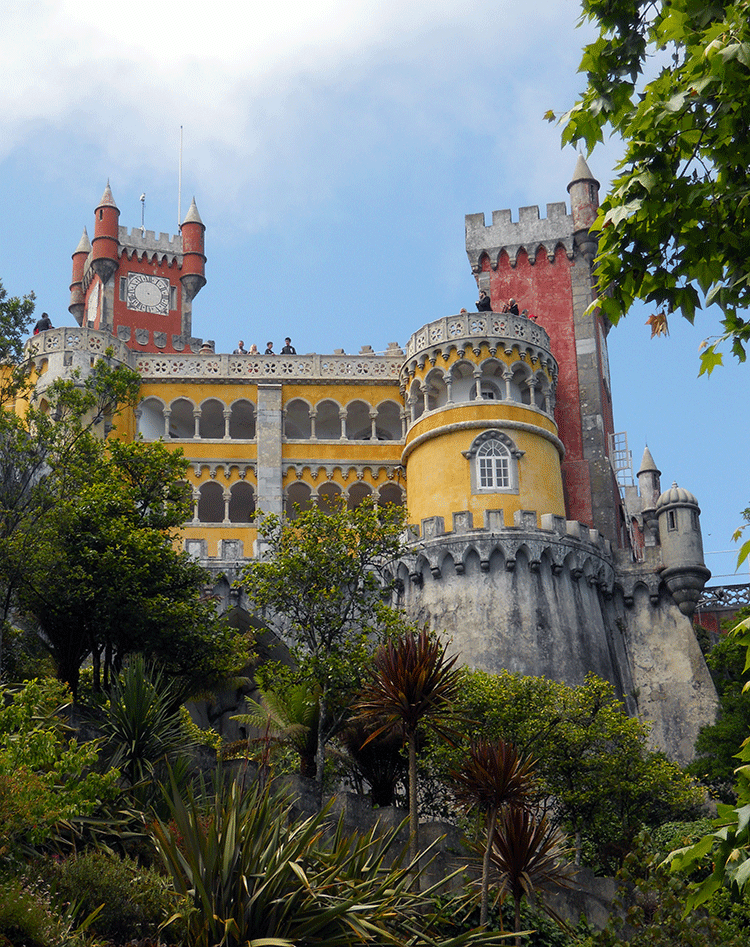
Climbing up higher than the old Moorish Castle, one reaches a site where humble monks seeking an isolated retreat free from distractions established a monastery. Following the return of Vasco da Gama, King Manuel I (1469-1521) constructed a stone palace astride the hilltop as part of his celebration of Portugal’s vast new riches.
From 1840 to 1885, however, King Ferdinand II (1816-1885) transformed the Pena Palace into an overwhelming, over-embellished symbol of the aristocratic follies of European royalty (This was not the sole palace.) – a stunningly magical mélange of ornate Gothic, Renaissance, Moorish and Manueline architectural details.
Crumbling colonial power increasingly led to economic distress in the country, and King Carlos (1863-1908) resorted to dissolving the Parliament and assigning dictatorial powers to his prime minister. Discontent mounted, and brazen assassins fired into the open royal carriage as the King and his family traversed one of Lisboa’s main plazas. King Carlos and his eldest son were killed.
His second-born son, Manuel (1889-1932), succeeded him, only to be forced to flee to England in 1910. Manuel II was Portugal’s last king.
Amazingly, the leaders of the new republic preserved the palace and its lavish furnishings virtually intact.

 Postcards from Barton Springs